
While brewhouse and fermentation determine the inherent flavor profile of beer, the filling and packaging line is the critical final stage that determines whether that beer reaches the consumer in its optimal state. For large-scale breweries, craft operations, and beverage producers alike, the packaging stage is not merely the conclusion of production; it is the final gatekeeper of quality and a defining element of brand integrity.
A high-quality filling and packaging system minimizes the risks of oxidation and microbiological contamination, preserving flavor and mouthfeel. An efficient, automated line significantly boosts capacity, reduces product loss, and enables flexible production to accommodate diverse product varieties and formats. For any beverage producer aiming to scale up while maintaining quality, investing in a stable and reliable packaging line is essential.
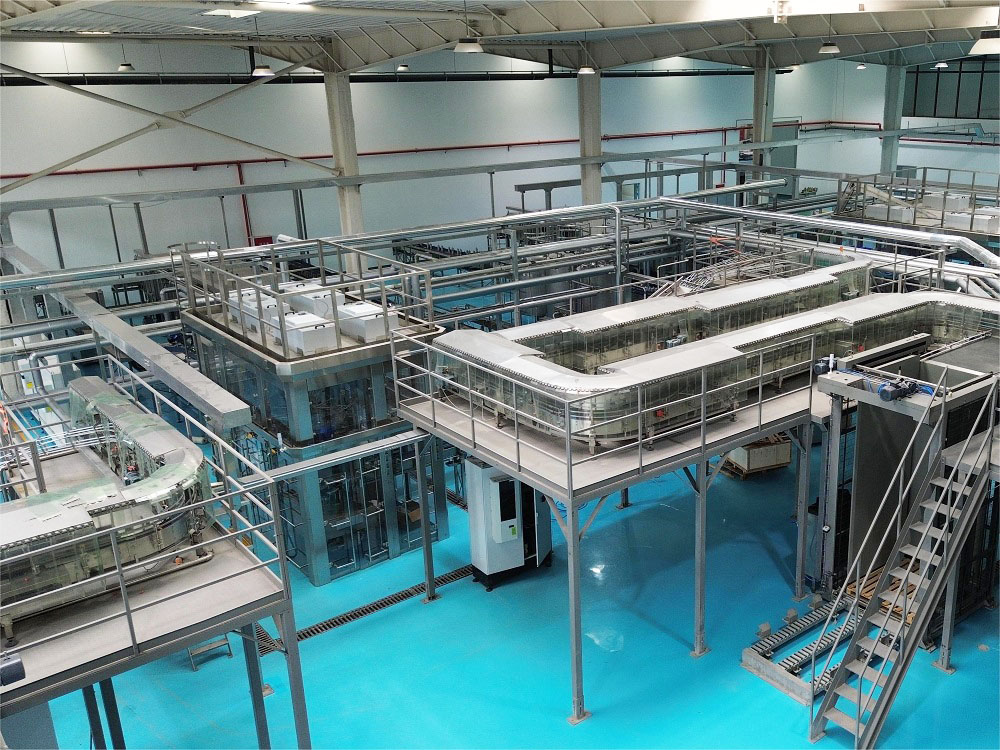
Drawing on Tiantai’s extensive project experience, the following outlines the standard process and key equipment for a beer filling and packaging line.
I. Container Pre-cleaning
Beer packaging utilizes various containers, including glass bottles, cans, tin cans, PET bottles, and kegs. New containers undergo rapid cleaning via a rinse/fill/can/bottle cleaner. Returnable glass bottles require processing through a bottle washer for high-temperature cleaning, sanitization, and drainage to ensure both internal and external surfaces are free from contaminants and residue, establishing a sanitary prerequisite for filling.
II. Container Inspection
Cleaned containers proceed to an Empty Bottle Inspector (EBI) or Empty Can Inspector (ECI). Utilizing vision and sensor technology, these systems automatically detect defects such as cracks, chips, and foreign material and verify fill volume standards. Non-conforming units are automatically rejected, eliminating potential quality issues at the source.
III. Beer Filling
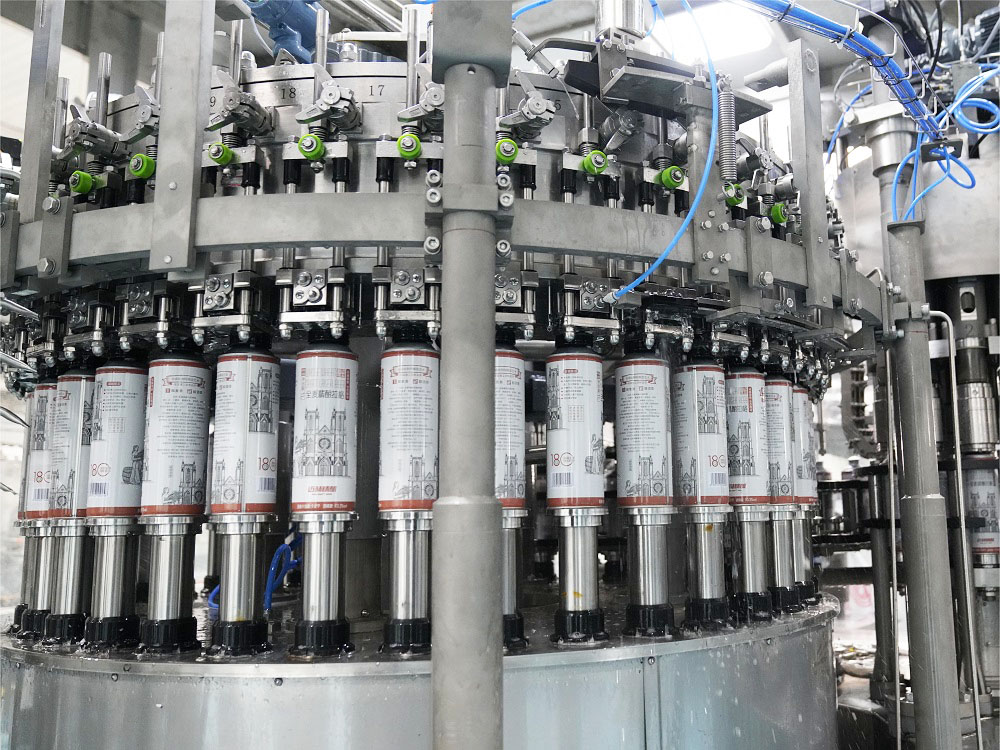
Approved containers enter the filler, where precise volumetric filling is completed within a sealed, low-oxygen environment. To inhibit oxidation and preserve flavor, containers are immediately crowned (bottles) or seamed (cans). This process is supported by technologies like CO₂ pre-pressurization, foam purging for oxygen displacement, and neck air evacuation, all working to minimize headspace oxygen uptake—effectively preserving the beer’s signature freshness.
IV. Sterilization Process
Beer is pasteurized or flash pasteurized in the tunnel pasteurizer. The objective is to ensure food safety by controlling the intensity of thermal treatment to minimize impact on the beverage’s flavor profile.
V. Labeling and Marking
Following sterilization, containers proceed to the labeling station. Bottles receive neck, body, and back labels. For cans, options include pre-printed cans or post-filling application of wrap-around labels to fulfill both brand presentation and regulatory compliance requirements.
VI. Case Formation, Packing, and Sealing
An automatic case erector forms flat corrugated blanks into ready-to-use empty cases.
A case packer then loads the specified quantity of bottles or cans into each case in an orderly arrangement.
Finally, a case sealer applies adhesive tape to seal the case, completing the standardized finished goods packaging.
VII. Palletizing and Unitization
Finished cases are automatically stacked onto pallets by a palletizer. The pallet load can then be stretch-wrapped or shrink-wrapped as required for unitized handling. This palletization process enhances logistics efficiency and reduces product damage during transport.
At this stage, the liquid has completed its transformation from the fermenter into a standardized, market-ready, and consumable finished product.
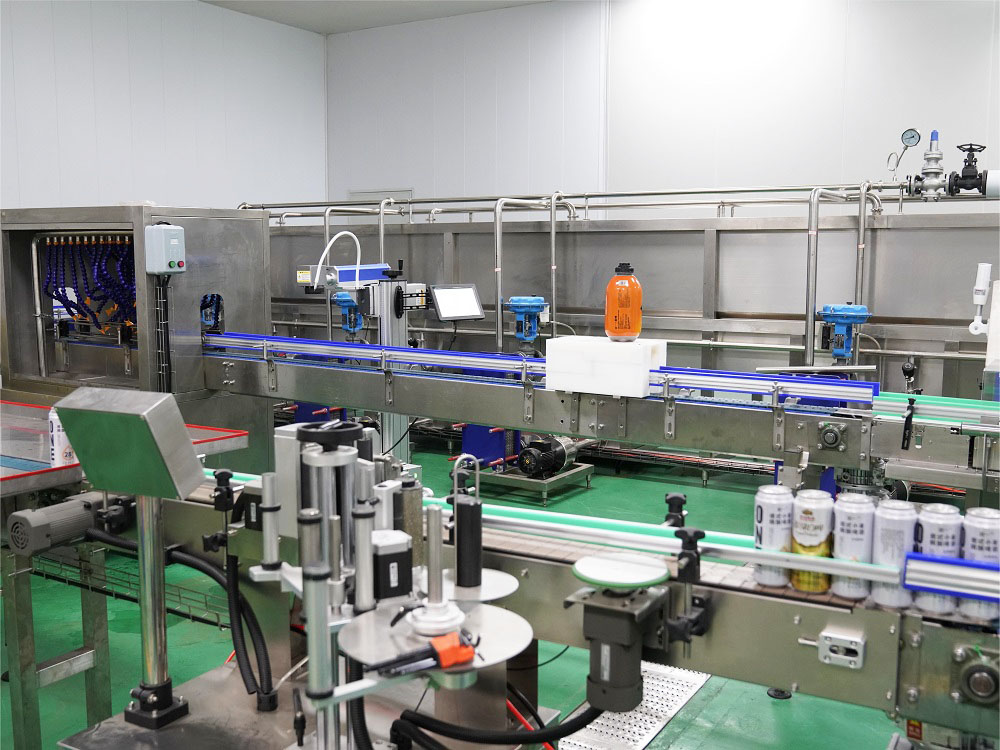
As the beer and beverage market becomes increasingly diverse, the segmentation of packaging formats, production capacities, and process requirements means standardized production lines often fail to meet bespoke manufacturing demands. Tiantai is a professional manufacturer of beer and beverage filling and packaging lines and a full-line project service provider. With years of deep industry experience, we possess mature capabilities in turnkey line design, manufacturing, installation, commissioning, and tailored customization services.
We offer solutions for various packaging formats—including glass bottles, cans, kegs, and PET bottles. Our portfolio ranges from single-machine selections to semi-automated/fully automated turnkey lines and flexible, customized configurations. We serve the entire spectrum from small-scale craft brewpubs to large-scale industrial beverage plants. Through stable equipment, proven process technology, and attentive service, we help clients enhance production efficiency while safeguarding product quality.
What are the common packaging types for beer?
I. Can Packaging
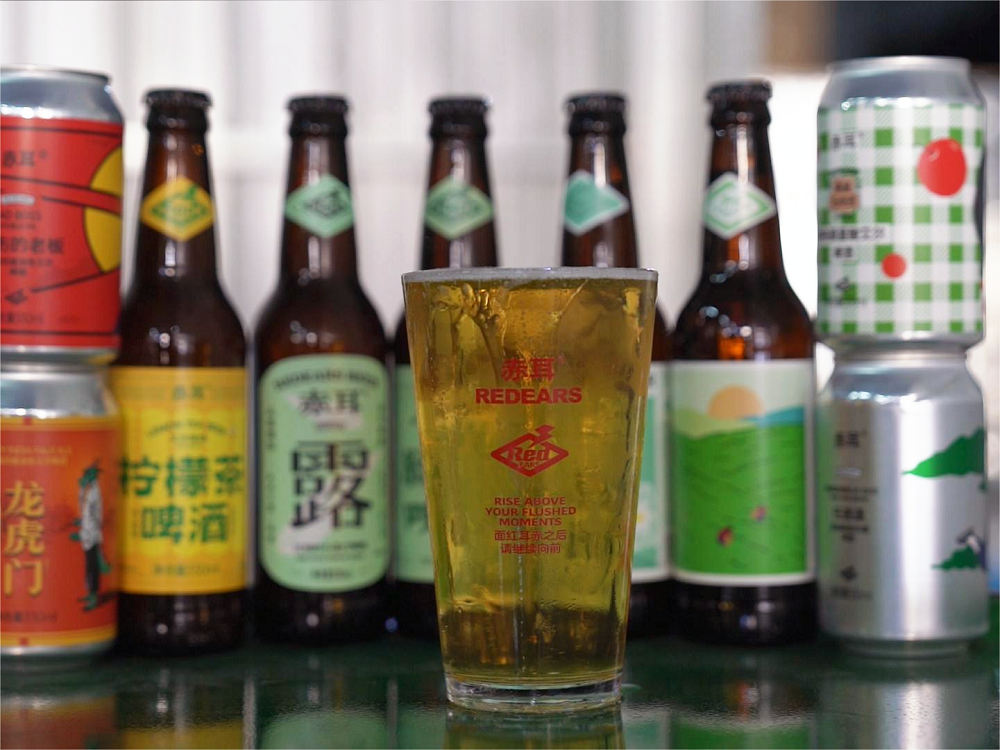
Cans cater to small-batch, multi-spec, and multi-channel production demands, collectively dominating over half of the current beer retail market. Favored by brewers for expanding into new markets and reducing operational costs, cans offer lightweight construction, superior seal integrity, and excellent light-blocking properties. Their ease of transport significantly cuts logistics costs compared to glass bottles and tin can containers. The exceptional light and oxygen barrier, combined with professional isobaric filling technology from suppliers like Tiantai, effectively locks in the beer’s original malt aroma and creamy head retention over extended periods. Furthermore, the moderate unit cost of cans makes them suitable for all retail channels, including supermarkets, convenience stores, and e-commerce, offering outstanding cost-effectiveness.
Can packaging places extreme demands on sealing precision and format changeover efficiency. Inadequate sealing can lead to leakage, while frequent format changes can disrupt production throughput. To address these pain points, Tiantai provides dedicated canning solutions. Imported sealing rollers ensure precise double-seaming to eliminate leakage risks and guarantee product qualification rates. Equipment supports rapid format changeovers, minimizing downtime for adjustments and enabling flexible adaptation to various can sizes like 330ml and 500ml, meeting diverse brewery production needs.
II. Glass Bottle Packaging
Glass bottles, prized for their transparent clarity, offer a premium presentation that showcases a beer’s visual clarity and luxurious foam head. This high-quality aesthetic makes them a preferred choice for local pubs, regional distributors, and on-premise dining channels. For local breweries in particular, the avoidance of long-distance transport minimizes breakage losses while enhancing product appeal, making glass ideal for family gatherings, pub service, and similar settings.
Yet, the inherent challenges of fragility, high transport costs, and significant filling losses have long troubled many brewers. Standard filling lines often fall short of meeting bespoke production requirements. Tiantai’s glass bottle fillers provide stable and flexible handling for a wide variety of bottle types. Our isobaric filling technology precisely controls filling pressure to minimize foaming, thereby reducing bottle contamination and product loss from foam overflow, which helps lower production costs. The integrated automatic bottle washer and air rinser pre-clean interior surfaces, while food-grade 304 stainless steel contact parts ensure filling hygiene meets rigorous standards.
III. Tin can Packaging
Tin can containers offer exceptional seal integrity and corrosion resistance, effectively preserving the unique flavor profiles of specialty beers such as IPAs and stouts.
Tin can filling imposes stringent requirements on equipment for format flexibility, sealing accuracy, and precise fill-volume control. Inconsistent filling can lead to can deformation, compromising both product appearance and quality. Tiantai’s high-precision filling solution directly targets these industry challenges. Utilizing advanced filling valves, our system delivers exceptional fill-volume accuracy with industry-leading low tolerances, preventing container deformation. The equipment supports flexible format changes, accommodating various sizes and custom-designed tin cans to meet the personalized production demands of high-end craft breweries.
Tiantai, an integrated solutions provider encompassing design, manufacturing, project execution, and after-sales service, not only supplies filling machines compatible with various packaging materials but also engineers tailored filling solutions based on your brewery or beverage plant’s specific requirements and production capacity.