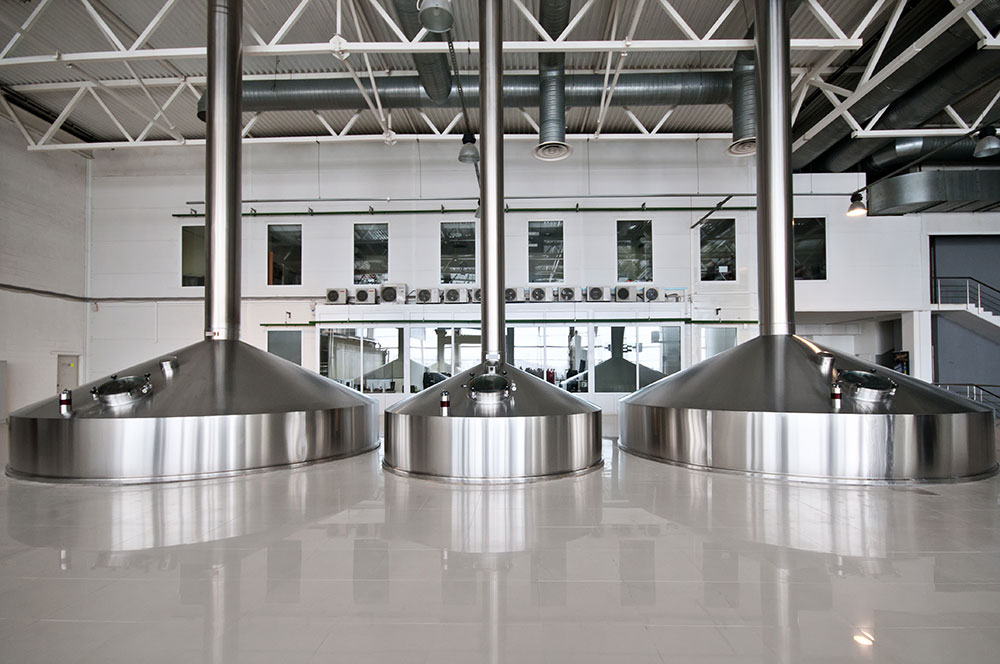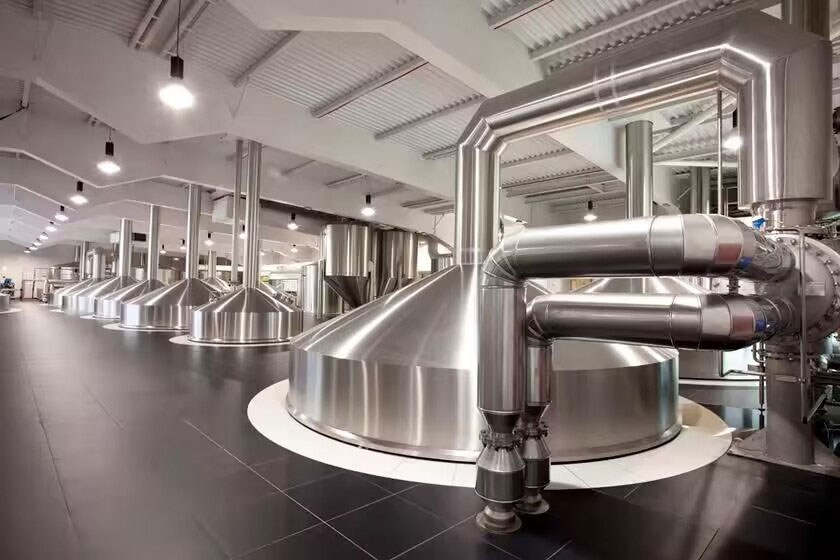

When planning a brewery, many investors and brewers often treat brewing equipment as a standardized commodity: choose the required capacity, place an order, install, and start brewing. However, brewing equipment is not a standalone product, but a core component of an integrated engineering system. Its design must align with anticipated production plans, process requirements, utility conditions, and long-term expansion strategies. A professionally designed brewing system not only ensures smooth installation and commissioning but also guarantees production efficiency, process stability, and scalability throughout the brewery’s entire lifecycle.
1. Brewing Equipment is Part of an Integrated Engineering Project
Brewing equipment should never be viewed as an isolated product. It is a vital component of a broader engineering system and must function properly within the specific facility and production environment. Its design must comply with building constraints, utility infrastructure, regulatory requirements, and long-term operational planning.
Factors Influencing Brewing Equipment Configuration:
Building Dimensions and Structural Layout—Ceiling height, column spacing, and spatial layout determine tank height, mash chamber configuration, and piping routing.
Access and Ground Dimensions – Access to the equipment, ground load-bearing capacity, and drainage location all affect installation feasibility and operational efficiency.
Utility Infrastructure – Local power supply (voltage, phase sequence, and frequency), steam supply, water capacity, and other energy sources must meet system requirements.
Environmental and Regulatory Conditions – Climate factors and local compliance standards influence the selection of insulation, ventilation, safety systems, and materials.
Future Expansion Strategy – Capacity increases, adding tanks, or upgrading automation systems should be considered during the design phase.
Directly adopting standardized brewing equipment without adapting to specific site conditions often leads to installation difficulties, inefficient workflows, reduced safety, or costly post-delivery modifications.
A well-designed solution assesses these variables beforehand, ensuring seamless integration between equipment, facilities, and long-term production goals.
2. Capacity is not the entirety of a complete brewing solution
When discussing brewing equipment, capacity is often the starting point. Search terms like “100HL brewing equipment” or “200HL brewing equipment” indicate theoretical output, but nominal capacity alone cannot determine the complete technical configuration of a brewing system. Two breweries with the same nominal capacity may require drastically different equipment designs due to different operational strategies.
Multiple operational factors directly influence system configuration. Brewing batches affect feed utilization and fermentation tank turnover. Diversity in beer styles and recipes may require specific process controls or additional containers. Fermentation cycles determine the total number of fermentation tanks and total capacity required to maintain stable output. Planned increases in output will influence whether the initial design should include modular expansion capabilities.
Therefore, capacity is only one parameter within a broader engineering framework. Effective brewing solutions must be designed around a brewery’s specific production model, operational goals, and long-term development plans, not just based on output.
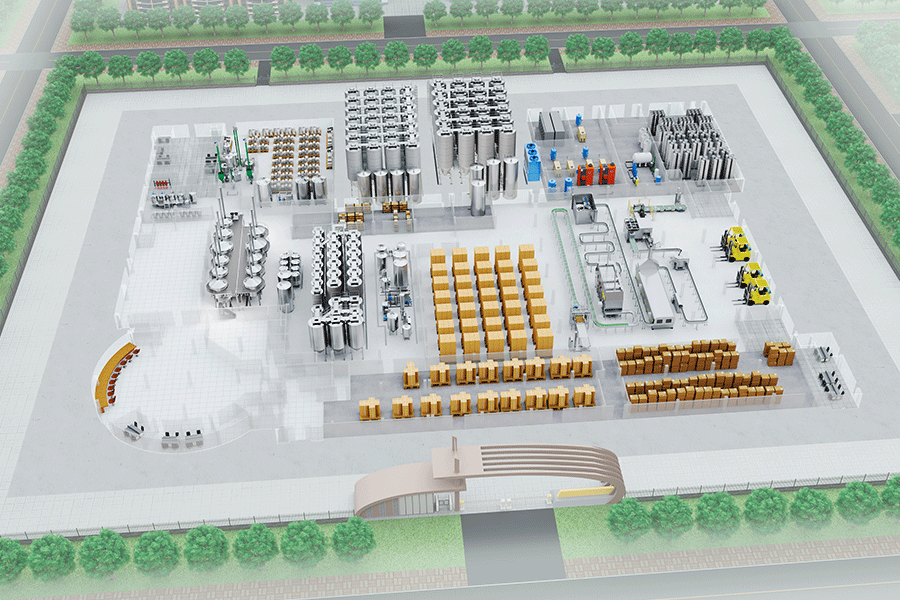
3. Customized brewing equipment represents engineering optimization
Customized brewing equipment is not simply about adjusting dimensions or increasing tank volume. True customization involves engineering optimization of the system to ensure efficient operation within the technical, spatial, and operational constraints of a specific project.
Maximize effective tank volume within height restrictions—design containers to achieve maximum usable capacity while meeting building ceiling limitations and installation space requirements.
Maintain structural integrity by optimizing tank shape—optimize the diameter-to-height ratio to improve space utilization and process performance while ensuring mechanical strength and pressure resistance.
Enhance operator convenience and workflow—design platforms, valve layouts, and piping routes to support safe, ergonomic operation, especially in space-constrained facilities.
Balance process efficiency and maintainability—configure systems to optimize heat transfer, fluid flow, and cleaning efficiency while maintaining ease of inspection, maintenance, and parts replacement.
4. Designed for long-term brewery operations
Brewing equipment is a long-term capital investment that needs to operate reliably for many years under continuous production conditions. Therefore, system design must go beyond the initial installation and commissioning phases and fully consider the feasibility of long-term operation.
Equipment configurations that only focus on delivery time or short-term start-up performance often neglect critical long-term requirements. These requirements include: efficient and thorough CIP (Clean-in-Place) cleaning to maintain hygiene standards and reduce downtime; convenient access for inspection and preventative maintenance to ensure operational reliability; streamlined spare parts replacement and repair processes to minimize service disruptions; and scalable design options that allow for capacity expansion without major structural modifications.
Every brewery is a unique engineering project with its own production goals and long-term development plans. No two projects are exactly alike; therefore, only fully customized brewing equipment can achieve optimal production efficiency, operational safety, and long-term sustainability.
Therefore, choosing the right brewing equipment partner is crucial. The ideal supplier offers more than just standard products. At Tiantai, we provide comprehensive engineering expertise, tailored system design, and extensive installation experience to ensure reliable brewery operation and effective future scalability.