
A commercial brewery in a hot climate needs more than standard brewing equipment. High ambient temperatures increase the load on cooling systems, sanitation routines, utilities, and packaging stability. That means the equipment list must be designed not only for production, but also for heat control, reliability, and long-term beer quality.
For brewery investors, project developers, and production managers, the goal is simple: build a system that can produce consistent beer even when the environment is not ideal. This is especially important in equatorial and tropical markets, where temperature, power stability, and water quality can directly affect operations.
Brewhouse equipment
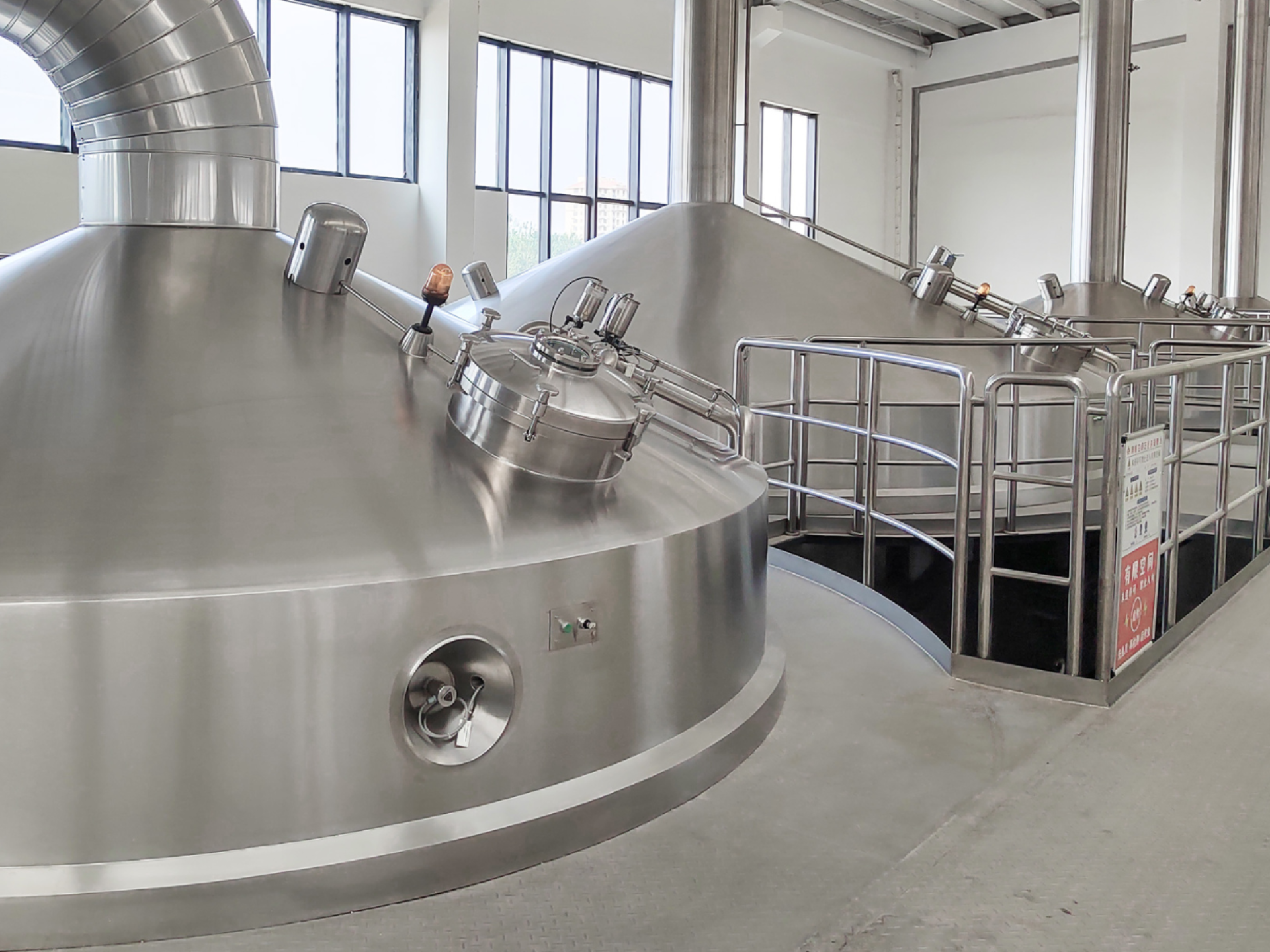
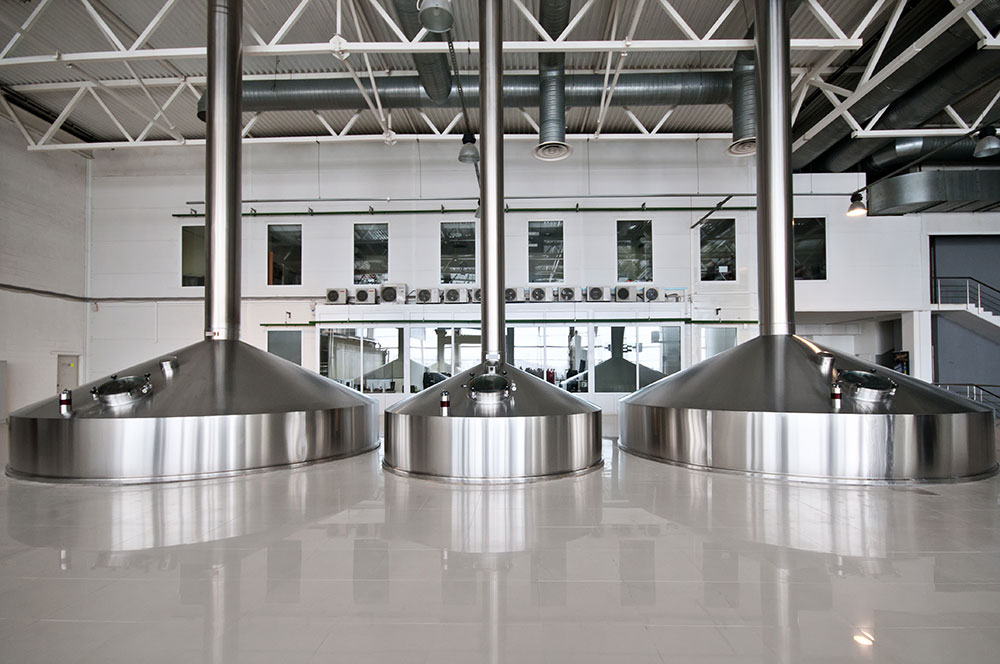
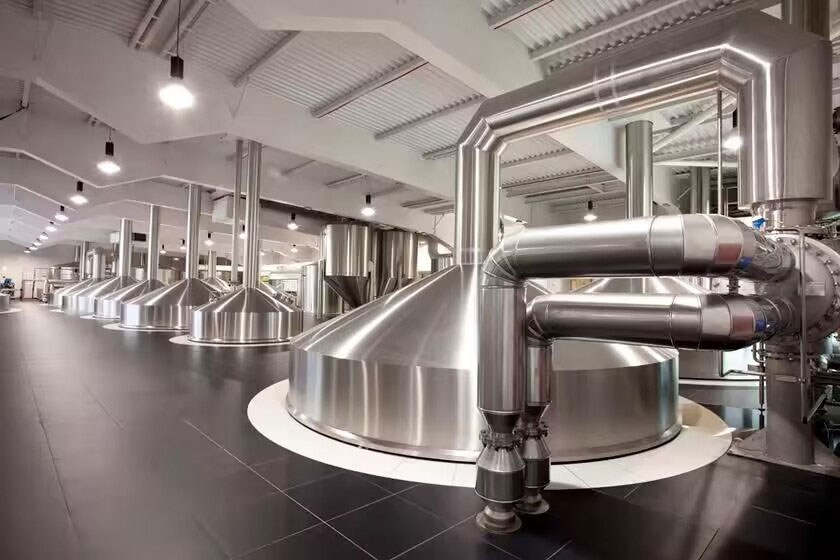
The brewhouse is the core of the brewery. It is where milling, mashing, lautering, boiling, and whirlpool separation happen. A commercial system usually includes a grain mill, mash tun, lauter tun, brew kettle, whirlpool, hot liquor tank, wort pump, heat exchanger, and brewhouse control panel.
For hot climates, the brewhouse should be built with strong insulation, efficient heat transfer, and easy cleaning access. Steam heating is often preferred in commercial setups because it gives stable thermal control. A well-designed brewhouse reduces energy loss and helps operators keep the process consistent from batch to batch.
Fermentation and cellar equipment
After wort cooling, the beer moves into the cellar. This area usually includes cylindroconical fermentation tanks, bright beer tanks, yeast collection tanks, and pressure-rated storage vessels. These are the most important vessels for protecting flavor, consistency, and shelf life.
In hot climates, fermentation tanks should have insulated jackets and reliable glycol cooling. Temperature drift can lead to off-flavors, slow fermentation, or inconsistent attenuation. Bright beer tanks should also be cooled and insulated so beer remains stable before packaging.
For commercial production, cellar design should also leave enough space for access, maintenance, and future expansion. If the brewery grows, the cellar is often the first area that needs more tank capacity.
Cooling system and glycol chiller
A brewery in a hot climate cannot rely on passive cooling. A glycol chiller is essential for fermentation control, tank conditioning, and sometimes cold-room support. The chiller should be sized for both production load and ambient heat.
The cooling system normally includes a chiller unit, glycol tank, insulated piping, circulation pump, control panel, and temperature monitoring. In a hot market, this equipment should be treated as production-critical. If cooling fails, beer quality can be affected quickly.
For that reason, brewery planners should also consider backup cooling strategies, spare pumps, and regular inspection of insulation, valves, and fittings.
Water treatment equipment
Water quality affects nearly every stage of brewing. It influences mashing, cleaning, rinsing, and final beer character. A commercial brewery usually needs a pretreatment system that may include sediment filters, activated carbon, softeners, UV treatment, and reverse osmosis, depending on local water conditions.
In hot climates, water supply and water quality can be more variable, so the treatment system should be built with enough redundancy and monitoring to avoid production interruptions. Good water treatment protects both product quality and CIP performance.
CIP system

A clean-in-place system is not optional for a commercial brewery. It is the backbone of hygiene control. The CIP system usually includes caustic tank, acid tank, hot water tank, CIP pump, hoses, spray balls, return lines, and a cleaning control panel.
A brewery operating in a hot climate should pay special attention to sanitation because warm conditions can accelerate microbial growth and residue buildup. The CIP system should be sized so it can clean the brewhouse, cellar, transfer lines, and packaging-related contact surfaces without manual shortcuts.
A strong CIP setup reduces contamination risk, lowers labor costs, and improves overall product stability.
Packaging equipment
The packaging line is where beer becomes a sellable product. A commercial brewery may need bottle filling equipment, can filling equipment, keg filling systems, rinsers, cappers, seamers, labelers, coding machines, inspection units, carton packers, and palletizing support.
Packaging should match the brewery’s target market. Some breweries need flexible small-batch packaging, while others need higher-speed automated lines. In hot climates, packaging rooms should be designed to reduce heat exposure and protect the final product from oxygen pickup, seal problems, and storage instability.
If the brewery plans to expand later, the packaging line should be selected with scalability in mind.
Utilities and support systems
A brewery is only as reliable as its utilities. The most important support systems usually include:
- A steam boiler for heating and CIP hot water
- A glycol chiller for cooling
- Compressed air for valves and automation
- CO2 supply for carbonation and packaging
- Backup generator for power continuity
- Electrical control panels and automation systems
In hot regions, backup power is especially important. Even a short outage can interrupt cooling and affect fermentation. That is why power continuity, generator sizing, and control protection should be part of the original design, not added later as an emergency fix.
Spare parts and maintenance items
A complete brewery project should always include spare parts and basic maintenance inventory. That normally means gaskets, seals, valves, pump parts, sensors, hoses, filters, spray balls, relays, and critical electrical components.
For operators in hot climates, maintenance planning is not a side task. It is part of production protection. A brewery that stores the right spare parts and follows a preventive maintenance schedule will usually see less downtime and better product consistency.
Angola example: why this matters
Angola is a useful example of why this equipment list matters in hot climates. Warm weather, utility constraints, and logistics requirements make cooling, sanitation, and backup power especially important for commercial breweries. The same logic applies to many high-temperature markets near the equator.
That is why commercial buyers in these regions usually search for practical topics such as brewery equipment lists, cooling system sizing, water treatment, installation planning, and maintenance strategy. They are not looking for theory. They are looking for a system that works in local conditions.
Conclusion
A commercial brewery in a hot climate needs a complete equipment package built around four priorities: production efficiency, temperature control, sanitation, and operational continuity. The brewhouse, cellar, CIP system, packaging line, and utility systems all have to work together.
About Tiantai: We design and manufacture commercial brewing equipment for demanding environments worldwide. From 500 L craft systems to 50,000 L industrial facilities, we provide integrated solutions including brewhouse, fermentation, CIP, utilities, and automation—engineered for your specific climate and market conditions. Contact us for a consultation on your brewery project.