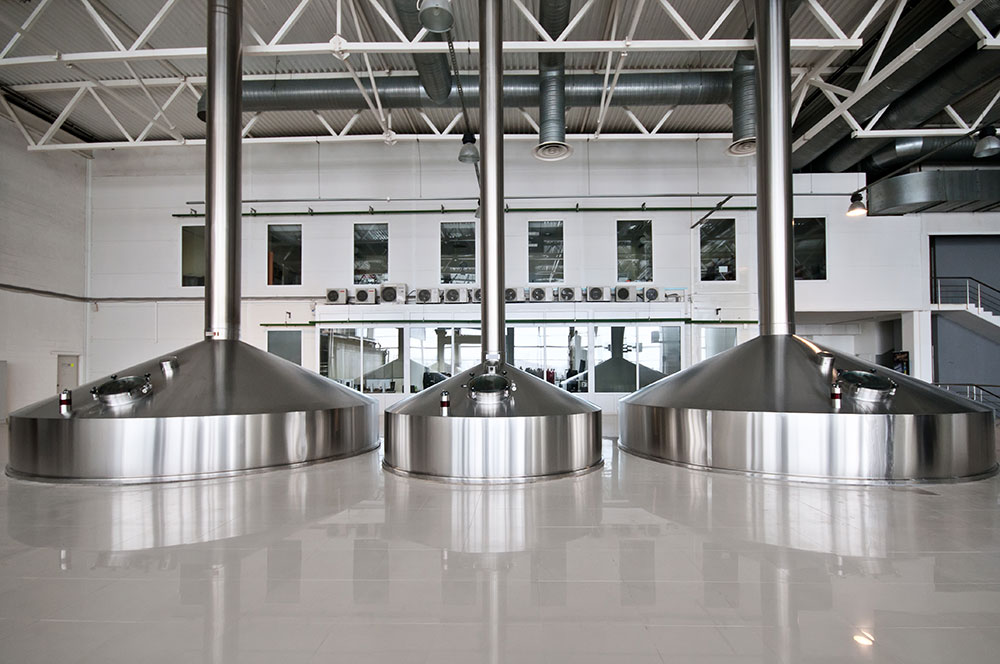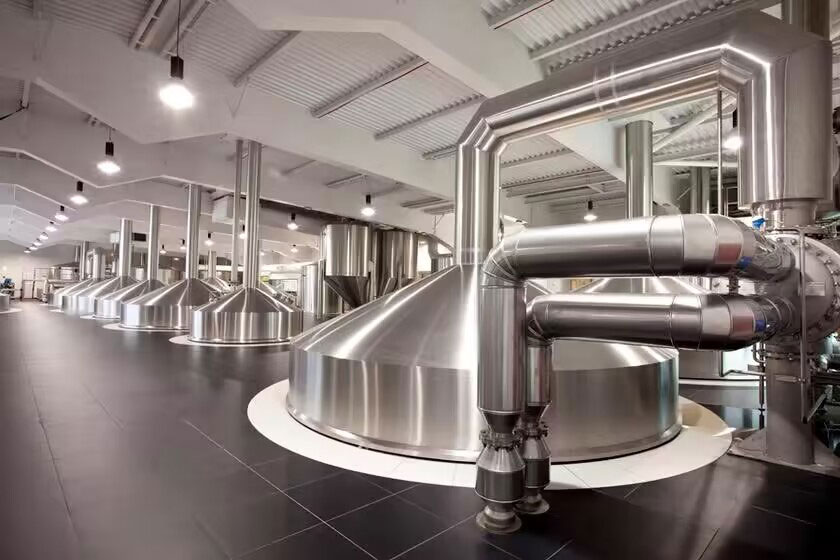

Many clients planning new craft breweries, undertaking plant retrofits, or launching medium-to-large beer projects often fall into a common pitfall when selecting brewhouse equipment: they only compare stainless steel plate thickness, surface polishing finish, and price. While visual workmanship forms a basic requirement, a high-performance brewhouse system acts as a precision process unit integrating heat exchange, material transfer, and solid-liquid separation. The brewhouse directly shapes wort quality, batch consistency, raw material loss, and energy consumption, and sets the baseline for flavour performance in subsequent fermentation.
Wort undergoes mashing, lautering, boiling, and whirlpool separation within this section. Any structural defects in equipment at individual stages will be carried through and impact the finished beer.
Material Specification and Vessel Fabrication
Food-grade stainless steel represents the minimum requirement. Even among 304 and 316L grades, fabrication standards vary drastically.
Material Selection: Food-grade 304 stainless steel is widely adopted for standard brewhouse sections, given the high-temperature, mildly acidic environment during wort boiling. Vessels classified as pressure vessels, including those for pressurized boiling and large-scale vacuum boiling, must be supplied with complete pressure vessel design, manufacturing certification and full documentation.
Welds and Surface Finishing: Internal welds shall be fully welded from both sides, passivated by pickling, with hygienic contact surfaces finished to Ra ≤ 0.4 μm. Rough welds or unground weld beads create harborage points for microorganisms that cause cross-batch contamination, which cannot be eliminated completely via CIP cleaning.
Plate Thickness and Reinforcement Design: Thicker plate alone does not guarantee better quality. Calculations are performed based on vessel diameter, jacket pressure, vacuum conditions and seismic loading. Reinforcement is implemented for stress-concentrated zones such as jacket zones, manholes, large-bore nozzles and support lugs. Vacuum protection components are mandatory to prevent vessel collapse during cooling cycles. Low-cost equipment with inadequately thin plates is prone to deformation after repeated thermal cycling.
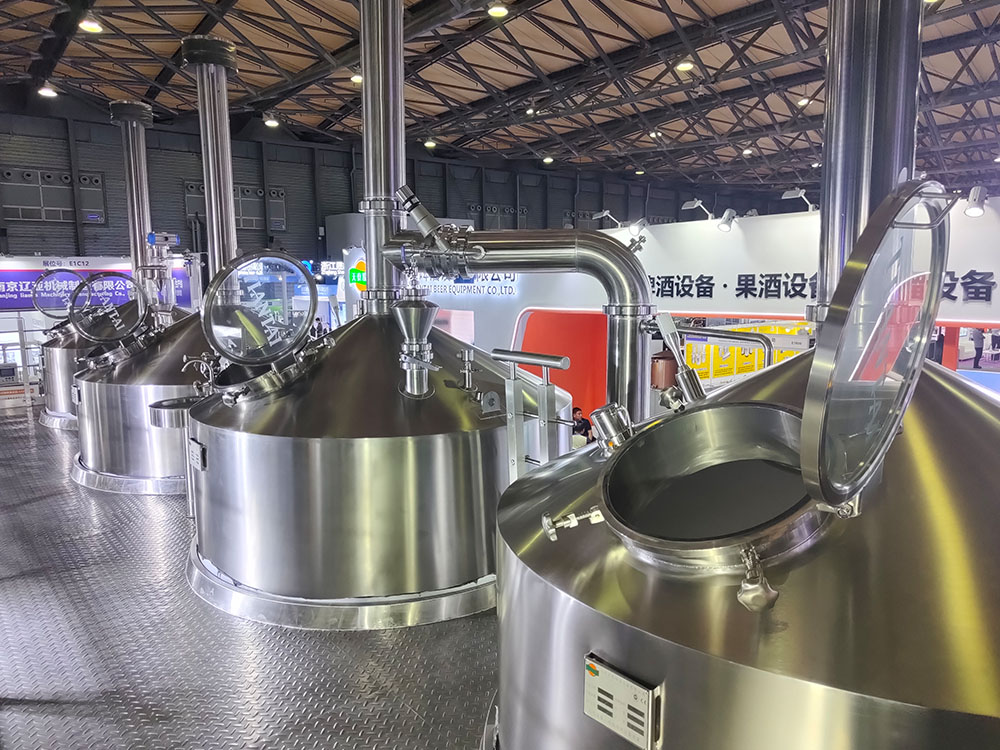
Key Pitfall: Many low-bid suppliers only polish the visible inner wall of vessels, leaving welds on nozzles, tees and bottom dead zones untreated. These defects are hard to spot visually but trigger persistent hygienic issues after commissioning. Risks are amplified for large brewhouses with lengthy piping and numerous branch connections.
Wort Oxidation Control
Oxygen uptake by hot wort generates oxidation precursors, leading to cardboard and stale flavours, intensified beer colour, harsh bitterness and shortened shelf life. TBA value is a standard indicator for wort staling; lower TBA corresponds to superior antioxidant capacity and reduced staling potential.
Vessel Head Design and Venting Configuration: Proper vapour evacuation prevents negative pressure and air ingress. Vacuum breakers shall be sized for design operating conditions. Large brewhouses generate substantial peak steam flow, so vapour line sizing and headspace volume must match peak steam load to avoid pressure buildup or suction-induced air entrainment.
Whirlpool Geometry: Wort enters tangentially, using centrifugal force to form a compact cone of hot trub at the tank centre while avoiding turbulent mixing and oxygen pickup. Medium and large whirlpools require strict flow velocity control, with dedicated inlet distribution and overflow weir designs to suppress surface disturbance and entrainment.
Heat Transfer and Temperature Control
Mashing relies on precise temperature profiles including protein rest and saccharification rest. Heat exchange capacity during boiling governs boil intensity and DMS stripping efficiency.
Jacket Heat Transfer Structure: Steam jackets are fitted with flow deflectors to ensure uniform media distribution and localized overheating that scorches wort. Jackets are subjected to pressure testing, and operating pressure is strictly controlled to avoid inner shell buckling.
Boil Intensity and DMS Management: The preferred boil intensity range is 8%–12% per hour. Insufficient boil intensity fails to fully decompose and strip SMM, resulting in undesirable cooked corn notes. DMS (Dimethyl Sulfide) is a prominent volatile sulphur compound that impacts beer flavour, with a flavour threshold of approximately 30 μg/L. At 100 °C and pH 5.6, 40 minutes of boiling reduces DMS concentration by 92%. Vacuum boiling further shortens boiling duration and reduces coagulable nitrogen.
Wort Cooling Package: Plate heat exchangers are widely used for their high thermal efficiency and compact footprint. Critical criteria include gasket material, hygienic plate grade and cooling rate. Extended cooling time promotes DMS formation and raises risks of microbial proliferation and oxygen uptake. A two-stage cooling setup is standard: first stage with cooling water, second stage with chilled water to maintain stable cooling performance.
Temperature Control Accuracy: Premium brewhouse systems feature well-positioned temperature sensors for stable rest temperatures. PT100 RTD sensors deliver high precision (≤0.1 °C), long-term stability and rapid response, paired with PLC analogue modules for continuous closed-loop control. Sensor brand and quantity differentiate standard equipment from high-end brewhouse solutions.
Lautering and Spent Grain Discharge System
The lauter tun is the mainstream solid-liquid separation option, while mash filter presses are selected for specific projects. Poor lautering yields hazy wort, excessive polyphenols and elevated wort loss.
Lauter Tun Solution
False Bottom: Wedge wire false bottoms are standard. Slots must be uniform, with robust support structure to resist deformation under load. A defined clearance between the false bottom and tank base prevents uneven wort flow.
Rake and Plow Assembly: The rake mechanism lifts, lowers and rotates smoothly with optimised knife angles. Poor rake geometry cuts through the grain bed and causes cloudy wort. Lautering speed is governed by wort viscosity, grain bed depth and permeability.
Sparging Control: Uniform sparge water distribution prevents excessive polyphenol extraction from over-sparging localised zones. Air ingress into the grain bed must be avoided, as polyphenol oxidase catalyses polyphenol aggregation, darkening wort and degrading mouthfeel. Sparge water is typically supplied at 78–80 °C. Stable sparge logic maintains consistent final wort gravity. A 1%–2% difference in wort loss accumulates into substantial raw material cost variance over long production runs.
Mash Filter Press Solution
For high-capacity lines, high-adjunct recipes, and challenging raw materials such as wheat or oats, mash filter presses deliver more reliable separation. Evaluation points include plate sealing, filter cloth grade, programmable pressure ramping, automatic grain discharge and in-line CIP capability. Key advantages include thin filter cakes, faster throughput and higher wort yield, though they demand greater automation and maintenance input, ideal for continuous large-scale production.
CIP System
All vessels, pipelines and valves within the brewhouse must support CIP cleaning without disassembly for manual scrubbing.
Vessel internals are designed to minimise dead zones; all nozzles, tees and valves adopt hygienic tri-clamp connections.
CIP spray balls are strategically positioned to achieve full coverage without blind spots. Rotating spray heads deliver 360° coverage.
Pipelines are sloped to facilitate complete drainage and residual chemical removal. CIP must achieve bacteriological cleanliness, with residual microbial counts below specified process limits. A simple validation rule: if sections of piping cannot be integrated into the CIP circuit and require manual cleaning, hygienic risks rise sharply for continuous production and compliance with food safety standards. Medium-to-large brewhouses require a dedicated CIP skid equipped with online acid/alkali concentration monitoring, temperature and flow interlocks, automatic chemical dosing and waste recovery. Multi-zone sequential cleaning is supported to avoid cross-contamination of cleaning media and reduce water and chemical consumption.
Utility Integration
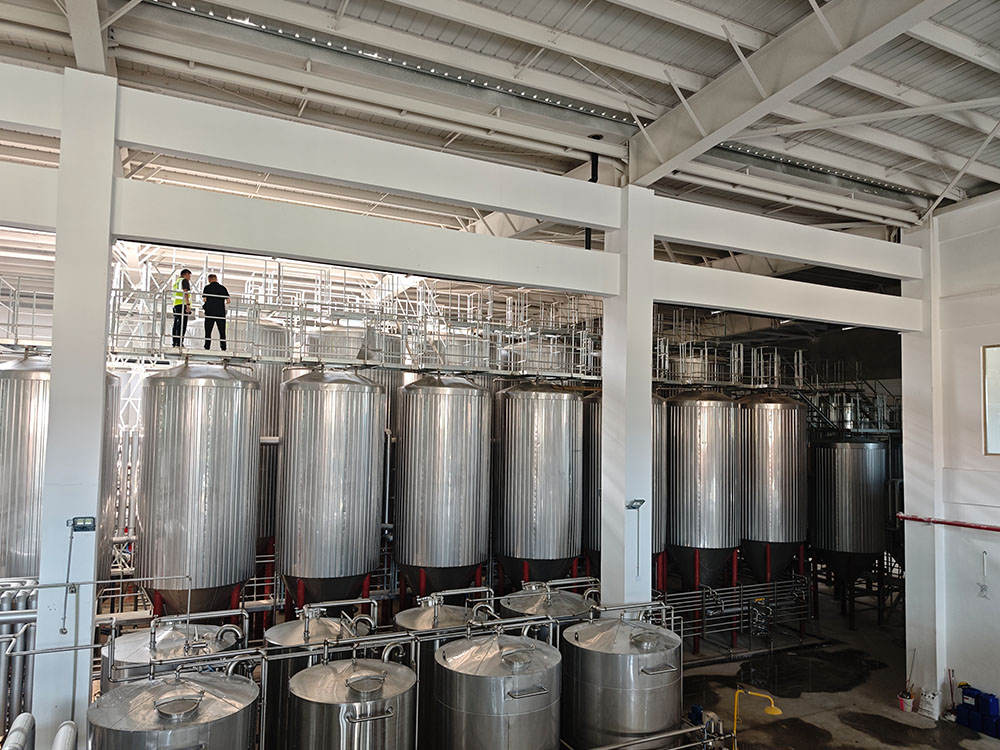
Small brewhouses tolerate wider fluctuations in utility supply, whereas large-scale brewhouses impose strict stability requirements for steam, chilled water, compressed air and power supply. At the design stage, peak steam demand, chilled water flow, circulating water and compressed air consumption are calculated to match the capacity of boiler, refrigeration and air compressor stations. Waste heat recovery is recommended; vapour heat from boiling can be recovered for domestic hot water and sparge water preheating, delivering significant long-term energy savings.
Surface polishing is only cosmetic. What truly matters is the supplier’s comprehensive brewing process expertise, and the ability to deliver custom engineering aligned with your production capacity, product portfolio, raw material profile, workshop layout and existing utility infrastructure — rather than merely supplying standard off-the-shelf tanks.
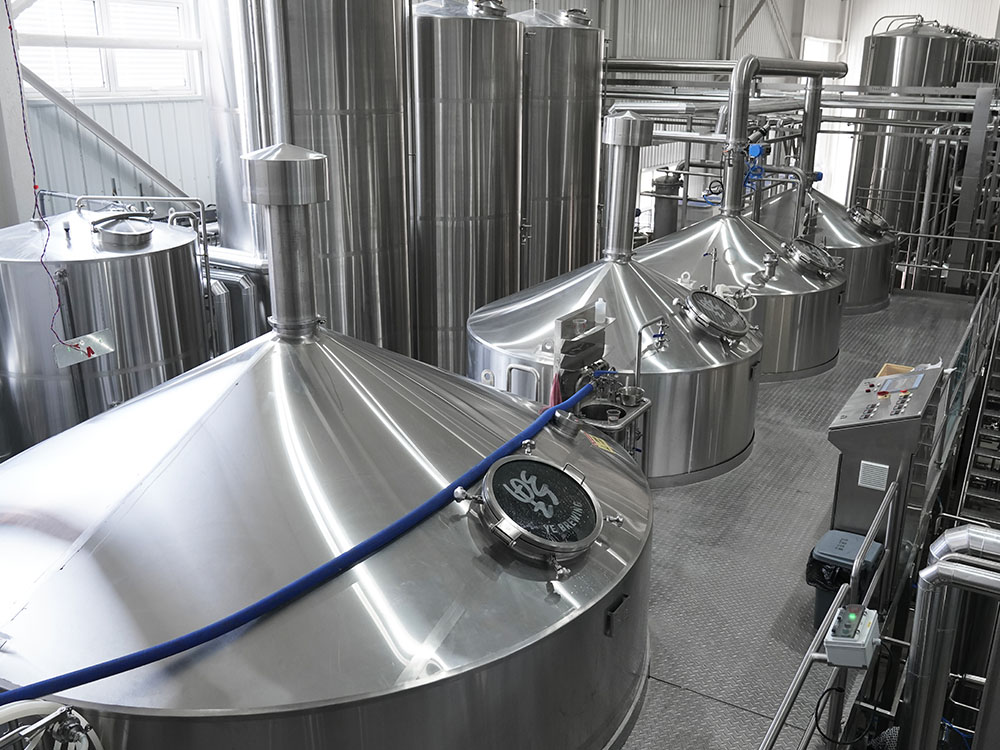
Tiantai is a trusted manufacturer of brewery equipment. We supply more than standard vessels, with deep know-how in brewing technology. Our scope covers craft breweries, microbreweries and large-scale commercial beer projects. Reach out to us to customise your brewhouse solution.