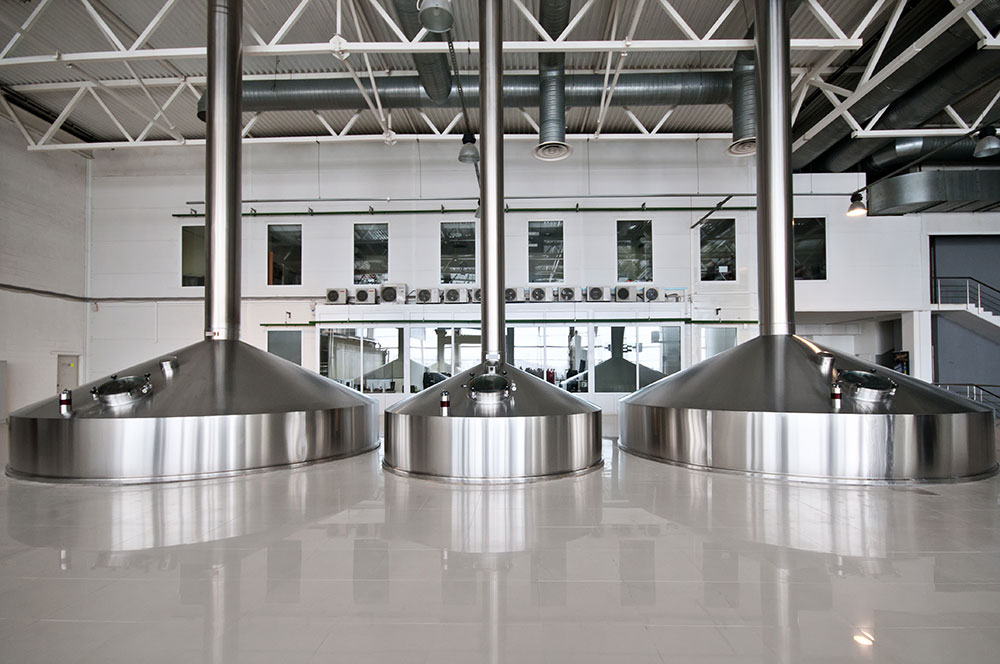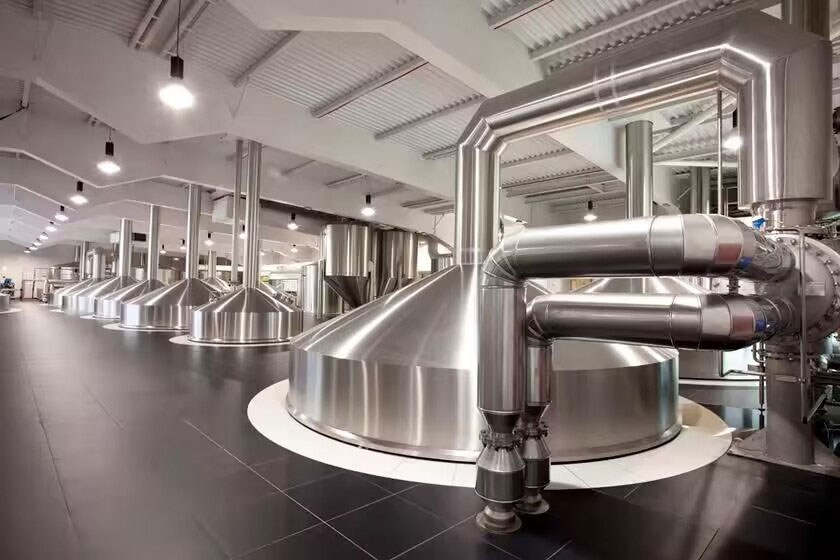

Driven by consumption upgrades, craft beer, with its unique flavors and personalized experiences, continues to expand its market size, becoming a new engine for growth in the beer industry. Craft beer brewing equipment, as the core carrier for quality control and efficiency improvement, directly determines the market competitiveness of craft beer companies.
Core brewing equipment for craft beer
Craft beer brewing involves three core stages: raw material processing, mashing, and fermentation. The equipment in each stage is interconnected, forming a complete production loop.
Ⅰ. Malt Grinding System: Raw material processing directly affects subsequent saccharification efficiency and flavor purity. Core equipment includes:
Dry Mill: Selected malt is conveyed to a screening machine to remove impurities, weighed, and then fed into a temporary storage silo. By adjusting the raw material outflow gate, the malt directly enters the grinder for grinding. The ground malt powder is stored in a malt powder silo for later use in brewing or directly fed to the feed mixer for mashing.
Wet Mill: After impurity removal, the malt is sent to the wetting system, where it is evenly wetted by hot water nozzles. It is then fed to the milling rollers by the feed rollers for grinding. The ground material is mixed with the slurry water and pumped into the mash tun.
Ⅱ. Mash System: The Mash process is crucial for starch conversion and flavor extraction. Core equipment must meet the requirements for precise temperature control and high-efficiency conversion:
Mash Tun: Features three core functions: starch conversion, protein breakdown, and mash mixing, meeting the saccharification needs of breweries.
Lauter Tun: Adaptable to seven filtration processes: top-heating, mash feeding, settling, turbid wort recirculation, first wort filtration, lees washing, and lees discharge.
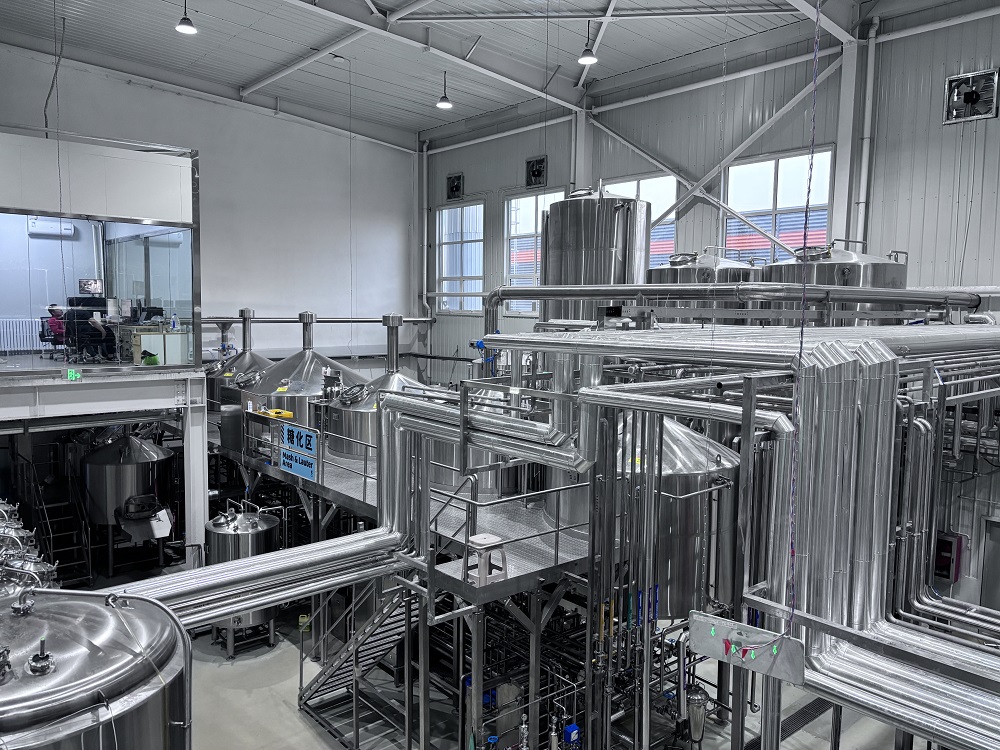
Brew Kettle: Integrates high-efficiency heat conduction, precise temperature control, and energy recycling technology, enabling efficient wort boiling and hop flavor integration.
Whirlpool Tank: Employs optimized fluid dynamics design and precision manufacturing processes to achieve synergistic control of efficient wort clarification and precise separation of hot coagulated matter.
III. Fermentation System: Fermentation determines the flavor, taste, and stability of craft beer. Equipment must be adapted to the fermentation characteristics of different yeasts:
Fermentation Tank: Their main function is to provide a suitable environment for yeast growth and fermentation, allowing sugars to be converted into alcohol and carbon dioxide. Fermentation typically uses indoor or outdoor cylindrical conical-bottom fermentation tanks. These tanks are equipped with automatic cooling systems, making it easy to control the fermentation temperature.
Yeast Propagation Tank: These expand the pure yeast strains stored at the brewery to a sufficient quantity for use on-site. This allows for independent yeast production at the brewery, more effectively ensuring yeast purity and stabilizing yeast quality, thus achieving consistent beer quality.

Yeast Recovery Tank: These tanks efficiently recover yeast after it has completed its fermentation process. This not only ensures the flavor stability of the beer in the current fermentation cycle but also provides robust and high-quality yeast for the next fermentation cycle, laying a solid foundation for the stability of the next batch of beer.
Automation trend
As the craft brewing industry shifts from “experience-driven” to “data-driven,” intelligent equipment is becoming the choice for an increasing number of craft breweries:
Ⅰ. Three Limitations of Traditional Equipment:
Reliance on manual operation leads to batch-to-batch variations, making it difficult to guarantee the stability of alcohol content and flavor.
Insufficient R&D support hinders precise control of variables, resulting in high trial-and-error costs and long development cycles for new products.
Weak capacity scalability makes it difficult to seamlessly integrate new capacity with existing equipment, leading to high upgrade costs.
Ⅱ. Core Advantages of Intelligent Equipment:
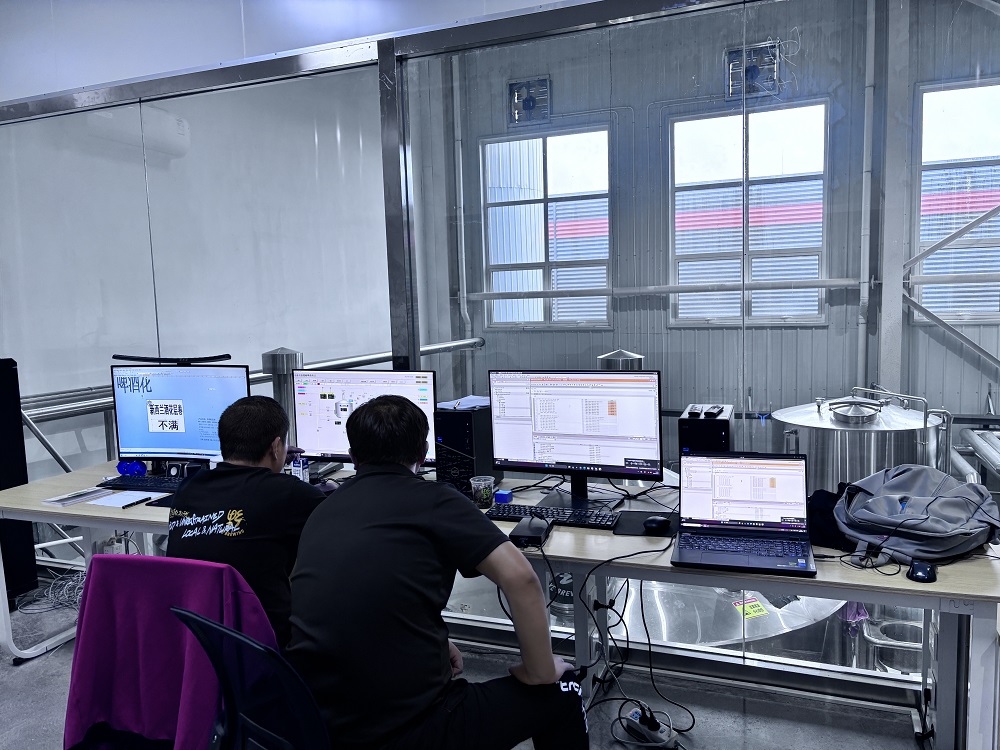
Full-process automated control: Achieves precise control of parameters such as temperature, pH, and wort concentration, reducing labor costs by more than 30%.
Real-time monitoring and early warning: Collects production data through high-sensitivity sensors, providing immediate alarms for abnormal parameters and mitigating the risk of brew spoilage.
Data-driven innovation: Reviewing process parameters through data analysis systems provides accurate references for new product development, shortening the R&D cycle by 50%.
III. Extended Value: From Equipment Upgrade to Ecosystem Optimization:
Intelligent equipment enables the integration of production data with ERP and supply chain systems, optimizing collaborative management of “production-inventory-sales.” It also supports flexible production, ensuring stable quality for batch products while enabling rapid recipe switching to meet the demands of personalized and seasonal limited-edition products, helping companies gain a competitive edge in the quality and efficiency race.
The competition in the craft beer market is essentially a competition of quality and efficiency, and brewing equipment is the core vehicle for this competition. Choosing equipment that matches production capacity, meets process standards, and has upgrade potential is a crucial step for craft beer companies as they grow from startups to large-scale operations. In the future, intelligent, flexible, and green brewing equipment will become the industry mainstream, continuously driving the high-quality development of the craft beer industry.