
Filtration is one of the last major process steps before beer reaches the bright beer tank or packaging line, but it is not simply a matter of making the beer as clear as possible.
Freshly fermented beer can still contain yeast, hop particles, proteinaceous material and other suspended solids. The amount and type of these materials vary considerably depending on the beer style, fermentation process, maturation time and dry-hopping practice. A filtration system therefore has to do more than remove particles. It has to fit the beer, the production schedule and the rest of the brewery.
For one brewery, a conventional kieselguhr filtration system may be the most practical choice. Another may benefit from centrifugal clarification before filtration, while a brewery producing selected specialty beers may have little reason to pursue brilliant clarity at all. Membrane filtration, depth filtration and cartridge filtration also have roles when the process calls for finer separation or tighter downstream control.
The right beer filtration system is therefore a process-design decision rather than a simple equipment purchase.
What Happens to Beer After Fermentation?
The clarification requirements of beer change as it moves through the cellar.
After fermentation, beer is far from a completely clear liquid. Yeast remains suspended in the beer, while proteins, polyphenols, hop residues and other colloidal material can contribute to haze. Some of these solids settle naturally during maturation, but the amount left in suspension can still be significant.
That matters because a fine filter works much more efficiently when it is not overloaded with large amounts of yeast and solids. High solids loading can increase pressure drop, shorten filter runs and increase the amount of beer retained in the filtration medium.
For this reason, breweries often treat clarification as a sequence rather than a single operation:
Fermentation → Maturation → Primary Clarification → Fine Filtration → Bright Beer → Packaging
Not every beer requires every stage. The process may be shortened for naturally cloudy beers, while a large commercial brewery may use several clarification and filtration steps to achieve stable throughput and consistent finished-beer quality.
The Brewers Association describes beer clarification as a combination of separation and filtration methods, with membrane systems commonly used for polishing or sterilization filtration and often preceded by centrifugation or precoat filtration.
The main beer filtration and separation technologies
Although breweries often use the word “filter” for all clarification equipment, different systems work in very different ways.
| Technology | How it works | Typical role |
|---|---|---|
| Beer centrifuge | Separates solids using centrifugal force | Primary clarification, yeast separation, pre-filtration |
| Kieselguhr filter | Builds a porous filter cake using diatomaceous earth | Conventional beer clarification |
| Plate and frame filter | Forces beer through filter sheets | Batch clarification and polishing |
| Depth filter | Retains particles throughout a porous medium | Fine clarification |
| Cartridge filter | Uses defined filter media for controlled particulate retention | Polishing and downstream protection |
| Membrane / cross-flow filter | Separates beer through a selective membrane | Fine filtration and microbial reduction |
| Bag filter | Captures coarse particles in a replaceable filter bag | Auxiliary or pre-filtration |
These systems should not be treated as interchangeable versions of the same machine. A centrifuge does not use a filter medium at all, while a kieselguhr system depends on a filter cake. A membrane system relies on membrane characteristics and operating conditions rather than the same filtration mechanism used by conventional depth filters.
The practical question is therefore not “Which filter is the finest?” but “What does this process need to remove, and when should it be removed?”
Beer Centrifuge: Take out the solids before they reach the filter
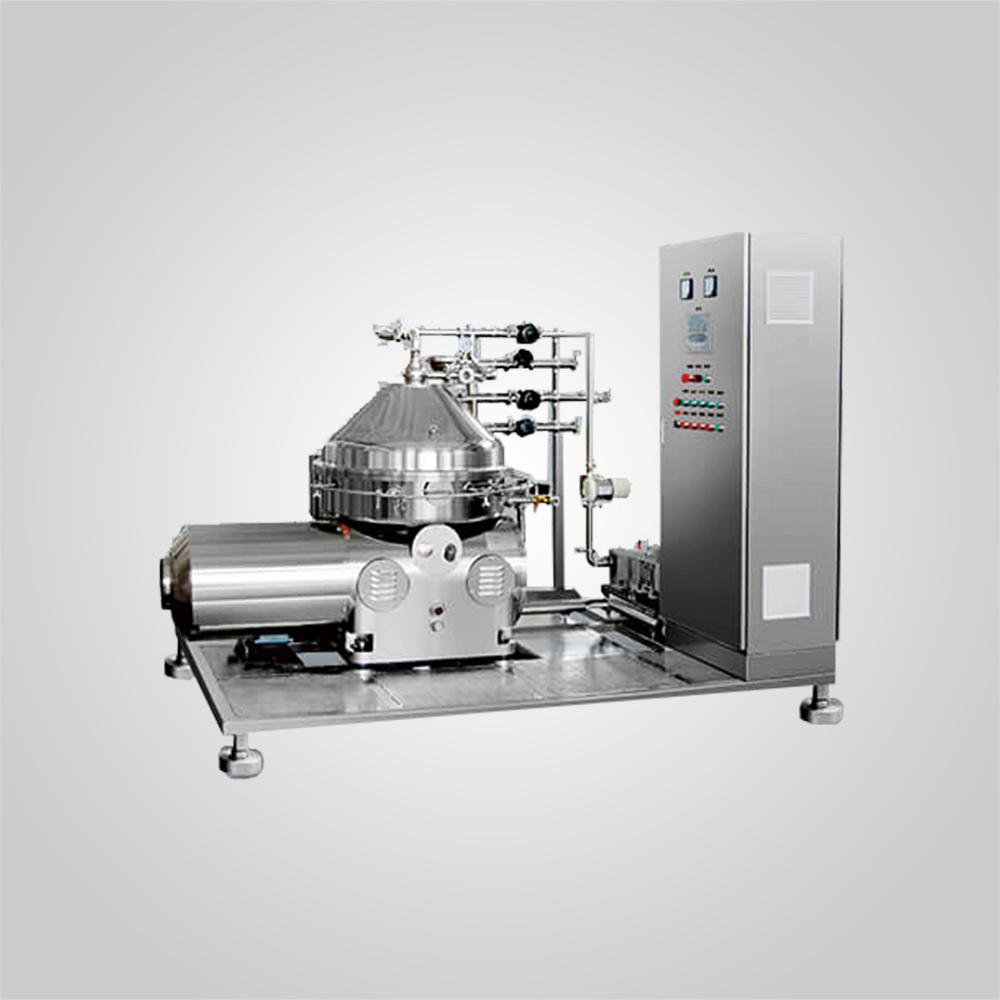
A disc-stack beer centrifuge is primarily a separation machine. Instead of passing beer through a filter medium, it uses centrifugal force to separate yeast and suspended solids from the liquid phase.
Inside the rotating bowl, a stack of conical discs creates a large effective separation area. The resulting centrifugal field allows suspended solids to separate much faster than they would under gravity alone.
In a brewery, a centrifuge can be used for green beer clarification, yeast separation, pre-clarification before downstream filtration and certain beer-recovery applications.
Its most important role in a filtration train is often upstream.
If a large portion of the yeast load can be removed before the beer enters a fine filter, the downstream system has less solids to retain. That can reduce filter loading and help maintain a more stable filtration rate. Industry guidance also describes centrifugation as a useful pre-clarification step for extending subsequent filtration runs and reducing filter-aid consumption.
This becomes increasingly relevant as brewery production grows. At higher throughput, filtration is no longer only a product-quality issue. Filter changeover, cleaning time, consumables, beer recovery and tank turnover all begin to influence production economics.
A centrifuge is therefore often best understood as part of a larger clarification strategy rather than a direct replacement for every other filtration technology.
Kieselguhr filtration remains a practical brewery standard
Kieselguhr, also known as diatomaceous earth or DE, has been used in breweries for decades and remains one of the most established methods for producing clarified beer.
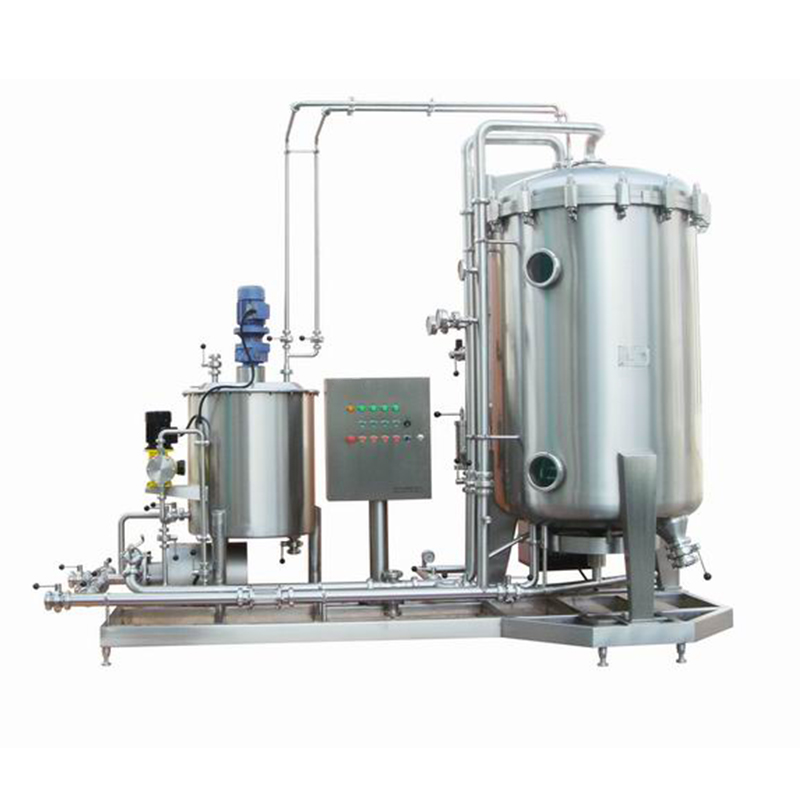
The principle is straightforward. Filter aid is deposited onto the filter elements to create a porous cake. As beer passes through the cake, yeast and other suspended particles are retained within the filtration layer.
A conventional system may include much more than the main filter vessel itself. Depending on the process, the installation can include a kieselguhr dosing or adding tank, mixing tank, front and rear buffer tanks, a candle filter and a downstream trap or polishing stage. StartBrewery’s own brewery projects use this type of integrated filtration arrangement.
One of the strengths of DE filtration is its ability to deal with a relatively high solids load while achieving a bright finished beer.
The trade-off is the use of consumable filter aid. The brewery must handle, dose and dispose of the spent kieselguhr, and some beer remains trapped in the filter cake. These are not necessarily reasons to avoid the technology, but they are important when comparing different filtration strategies.
For breweries that already use conventional process technology and have predictable production schedules, kieselguhr filtration can still be a sensible part of the overall plant design.
Plate and frame filters for flexible batch filtration
Plate and frame filters operate by pressing beer through filter sheets installed between a series of plates.
They are particularly suited to batch processing because the filter area and filter-sheet specification can be adapted to the required application. Different grades of filter sheets can be selected depending on whether the brewery needs coarse clarification, finer filtration or final polishing.
This flexibility can be useful for small and medium-sized breweries, especially those producing several beer styles with different clarity targets.
There is, however, more operator involvement than with highly automated filtration systems. Traditional plate and frame units need to be opened when filter sheets are installed or replaced, and filter handling becomes part of routine production work.
That may be perfectly acceptable for a smaller brewery where flexibility and lower initial equipment cost matter more than continuous automated operation.
Depth and cartridge filtration
Depth filters and cartridge filters occupy a different place in the process from heavy-duty primary clarification.
Depth filtration uses a porous medium that captures particles throughout its structure rather than only at one surface. It is often used when the beer has already been substantially clarified and needs additional polishing.
Cartridge filters offer more controlled particle retention and are commonly installed downstream to protect packaging equipment or achieve a specified level of particulate reduction.
These systems are particularly useful when the main filtration stage has already removed most of the yeast and suspended matter. Using a very fine filter against a heavily loaded beer is usually inefficient. The filtration sequence works better when each stage handles the kind of solids it is designed for.
In practice, this often means a brewery may use a centrifuge or conventional depth filtration for bulk solids removal, followed by a finer filter for polishing.
Membrane and cross-flow filtration
Membrane filtration offers another approach to beer clarification, particularly for breweries looking to reduce or eliminate the use of filter aids.
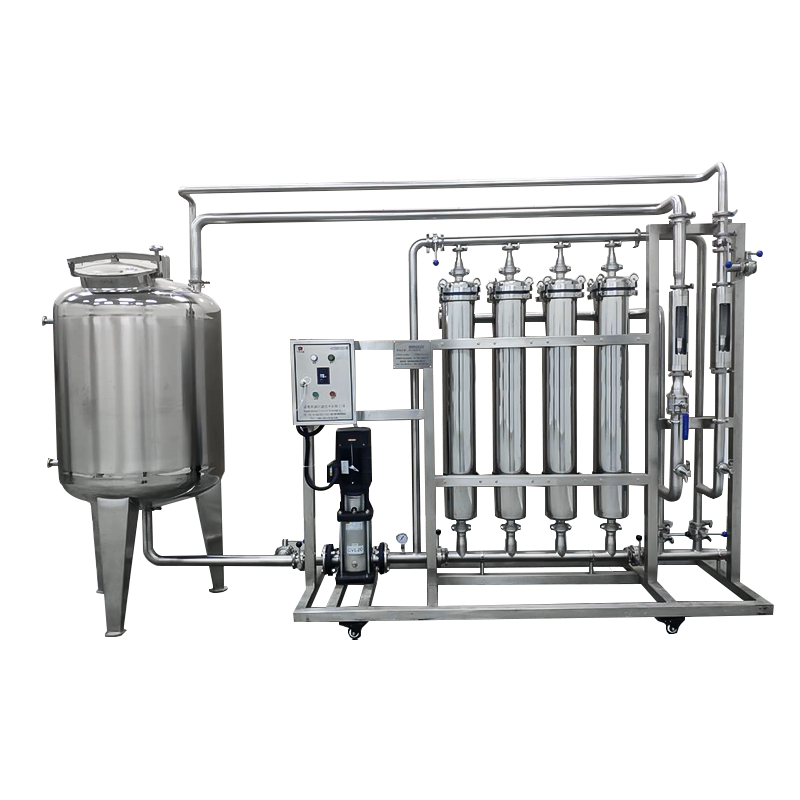
In cross-flow filtration, beer moves tangentially across the membrane instead of being pushed directly through a stationary filter cake. Part of the liquid passes through the membrane while retained material remains on the feed side and is carried away by the flow.
Depending on membrane type and process design, membrane filtration can be used for fine clarification, polishing and microbial reduction. It can also provide an enclosed process with a high level of automation.
The main engineering challenge is membrane fouling.
If a membrane receives beer carrying too much yeast or colloidal material, the membrane surface can load rapidly and the filtration performance can deteriorate. In other words, moving from kieselguhr filtration to cross-flow filtration does not automatically make the process simpler. The upstream clarification stage, membrane selection, operating conditions and CIP procedure all become important.
For this reason, breweries considering membrane filtration should look at the complete process rather than evaluating the membrane skid in isolation. A well-designed clarification step upstream can have a major effect on membrane operating time and overall system efficiency.
Bag filters have a more limited role
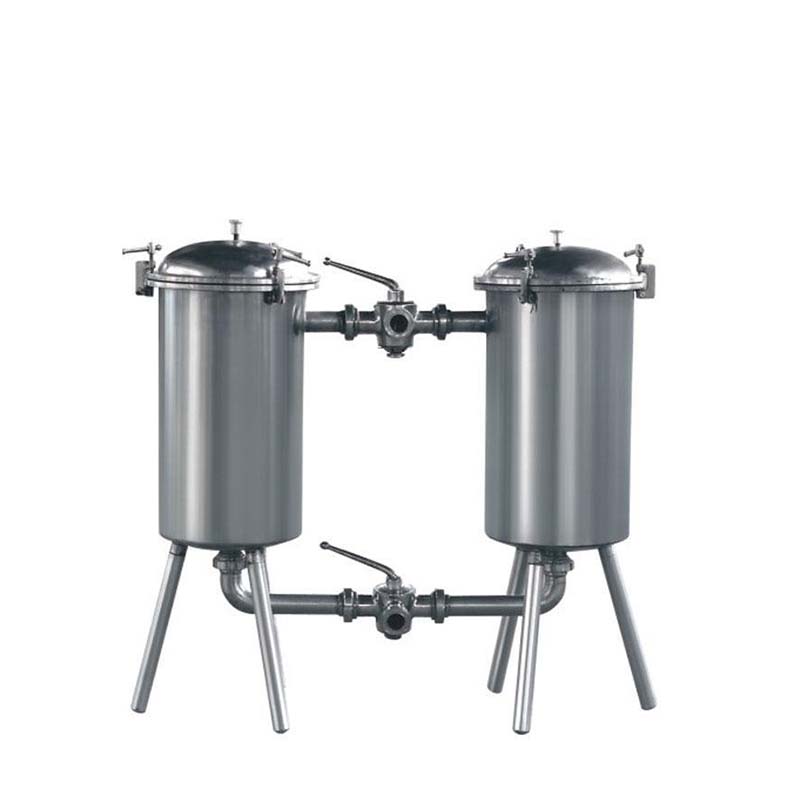
Bag filters are sometimes included in brewery filtration systems, but they generally serve an auxiliary role rather than acting as the primary final beer filter.
A bag filter can be useful for removing relatively coarse particles or protecting downstream equipment from larger solids. In that situation, the process may look like:
Coarse Separation → Bag Filter → Fine Filtration
The important point is to define what the bag filter is protecting and what particle load it is expected to handle. It should not be selected simply because it is inexpensive or easy to replace.
For finished beer that requires a stable, bright appearance, a more targeted clarification and filtration arrangement will normally be required downstream.
Do all beers need the same level of filtration?
No. This is one of the easiest points to overlook when designing a brewery. Filtration should support the intended beer rather than force every product toward the same visual appearance.
lager and pilsner
Traditional lager and pilsner products often have a clear, bright appearance. Extended cold maturation already helps with natural clarification, but commercial production may still require additional filtration to achieve the desired visual stability and repeatability.
A conventional process may combine primary clarification with kieselguhr filtration and a polishing stage. Larger breweries may add centrifugal clarification to reduce the solids load before the main filter.
IPA and other hop-forward beers
Hoppy beers can behave differently because hop particles and polyphenol-related haze may remain after fermentation and dry hopping.
Maximum clarity is not always the goal.
For some IPA and other modern hop-forward styles, aggressive filtration may remove more than the brewer wants to remove. Aroma, mouthfeel and appearance all matter, so the filtration target needs to be established before the equipment is selected.
The right question may be how much haze to remove, rather than how to produce brilliantly clear beer.
wheat beer and naturally cloudy styles
Wheat beer and other naturally cloudy styles can have an intentional haze profile.
In these cases, extensive filtration may be unnecessary. A brewery may choose only the amount of separation needed to control unwanted solids or protect the filling process while leaving the desired haze in the product.
This is why a filtration system should be designed around the brewery’s actual product range instead of relying on one universal filtration specification.
What should be considered when selecting brewery filtration equipment?
Filtration equipment should be selected together with the upstream and downstream process.
The first consideration is the beer itself. A clear lager, dry-hopped IPA and naturally cloudy wheat beer create different filtration requirements.
The second is solids loading. Yeast concentration and suspended solids have a direct effect on how quickly a filter will load. Upstream clarification can therefore influence the performance and operating cost of everything that follows.
Production capacity is another major factor. A compact batch filter may be entirely reasonable for a smaller craft brewery, while a larger commercial brewery may need continuous clarification, automated filter operation and higher throughput.
Product loss also deserves attention. Every filtration medium retains some liquid, whether that is beer trapped in a filter cake or product remaining in a disposable filter element. For a brewery producing large volumes, relatively small percentage losses can become a meaningful economic issue.
Consumables are equally important. Kieselguhr, filter sheets and cartridge elements all generate recurring operating costs. Membrane systems reduce dependence on disposable filtration media but introduce different requirements for cleaning, monitoring and membrane replacement.
Finally, the filtration system needs to fit the brewery’s CIP and automation strategy. A filter that performs well on paper can still create operational problems if its cleaning cycle, instrumentation or transfer arrangement does not match the rest of the cellar.
Designing filtration as part of the brewery
A filtration machine rarely operates alone.
The equipment has to connect logically with fermentation tanks, maturation vessels, bright beer tanks, pumps, sanitary piping, CIP systems, CO₂ management and the packaging line. Storage and buffer capacity may also affect how the filtration system is operated.
For a small craft brewery, the design priority may be simple operation, flexible batch filtration and manageable capital investment.
For a larger commercial brewery, the design may place greater emphasis on continuous clarification, automation, filter-cycle stability, beer recovery, CIP efficiency and integration with the wider production-control system.
StartBrewery approaches brewery filtration from this plant-level perspective. Its brewery projects include filtration and clarification equipment together with fermentation, bright beer storage, CIP, refrigeration, utilities, automation and filling systems. Existing project configurations also show the use of centrifuges and kieselguhr filtration in larger brewery installations, while smaller systems can be configured around a more compact filtration setup.
A filtration system should match the brewery, not the other way around
There is no single filtration technology that is ideal for every brewery.
Centrifugal clarification is valuable when yeast and solids need to be removed rapidly before downstream filtration. Kieselguhr remains a practical conventional solution for clarified beer. Plate and frame filters provide flexibility for batch production, while depth and cartridge filters are useful for polishing and controlled downstream filtration. Cross-flow membrane systems provide another route where the brewery is looking for enclosed, highly automated, kieselguhr-free processing.
The best configuration depends on the beer style, solids load, required clarity, production volume, packaging requirements and operating strategy.
For that reason, StartBrewery does not treat filtration as an isolated equipment selection. The clarification stage, filter type, buffer capacity, CIP system, automation and downstream packaging requirements all need to work together as one brewery process.
When planning a new brewery or upgrading an existing filtration line, the starting point should be the beer you intend to produce and the production target you need to achieve. The equipment can then be selected around those requirements.