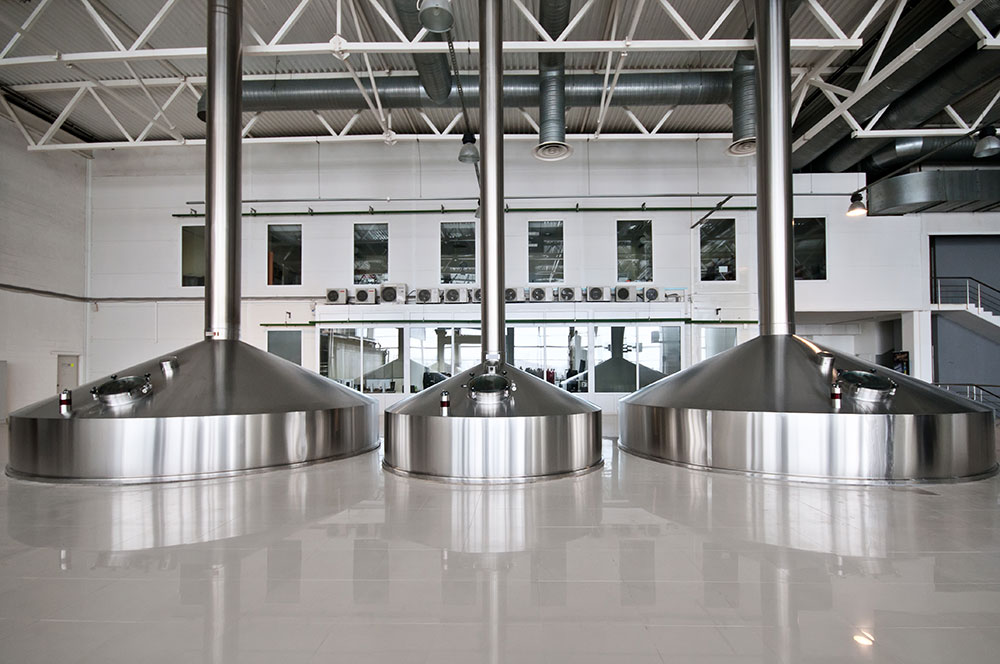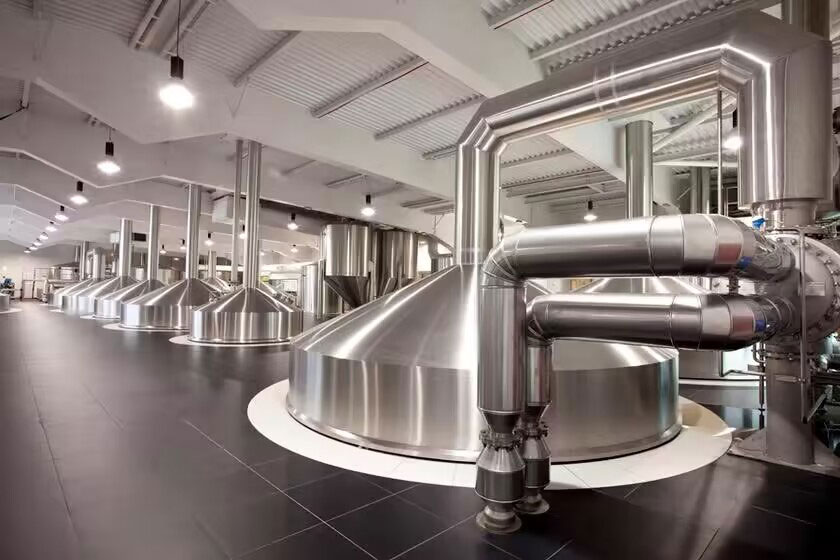

As competition in the beer market continues to intensify, breweries are expanding production capacity, optimizing processes, and improving equipment utilization to further reduce production costs. When building or upgrading a high-capacity brewery, the proper configuration of the tank system is just as important as the brewhouse and bottling or canning lines.
Different stages of production, from wort handling and fermentation to maturation and bright beer storage, require different types of tanks to ensure smooth process integration. Insufficient tank capacity can lead to production delays, while excessive capacity increases equipment investment, floor space requirements, and operating costs. Therefore, scientifically planning tank types, capacities, and quantities is essential for ensuring continuous production, maintaining consistent beer quality, and improving return on investment.
So, which tanks does a high-capacity brewery need? How should their capacities and quantities be determined? This article explores these questions from the perspectives of tank types, capacity calculations, equipment selection, and overall system planning.
What Types of Tanks Does a High-Capacity Brewery Need?
Tank configuration should be determined by production scale, process flow, and equipment operating schedules. Not every brewery requires exactly the same combination of tanks.
Wort Buffer Tanks
Wort buffer tanks help coordinate production schedules between mashing, boiling, whirlpool separation, and wort cooling, reducing waiting times between upstream and downstream processes.
Whether a separate buffer tank is necessary depends on the brewhouse design and material transfer process. For production lines involving continuous brewing operations, multiple batches, or mismatched processing times between stages, a properly configured buffer tank can improve equipment utilization.
Hot Water Tanks and Cold Water Tanks
Hot water tanks supply water for mashing, lautering, and equipment cleaning. Their capacities should be determined by considering water consumption per batch, brewing frequency, cleaning requirements, and heating capacity.
Cold water tanks or chilled water storage tanks store cooling media and provide a stable supply of cooling capacity for wort cooling and other process requirements. Their design should account for cooling loads, media temperature differentials, circulation flow rates, and refrigeration system capacity.
It is important to distinguish between storage capacity and heating or refrigeration capacity. Even if a tank has sufficient volume, production may still be affected if the heating or refrigeration equipment cannot replenish the required heat or cooling capacity in time.
Fermentation Tanks
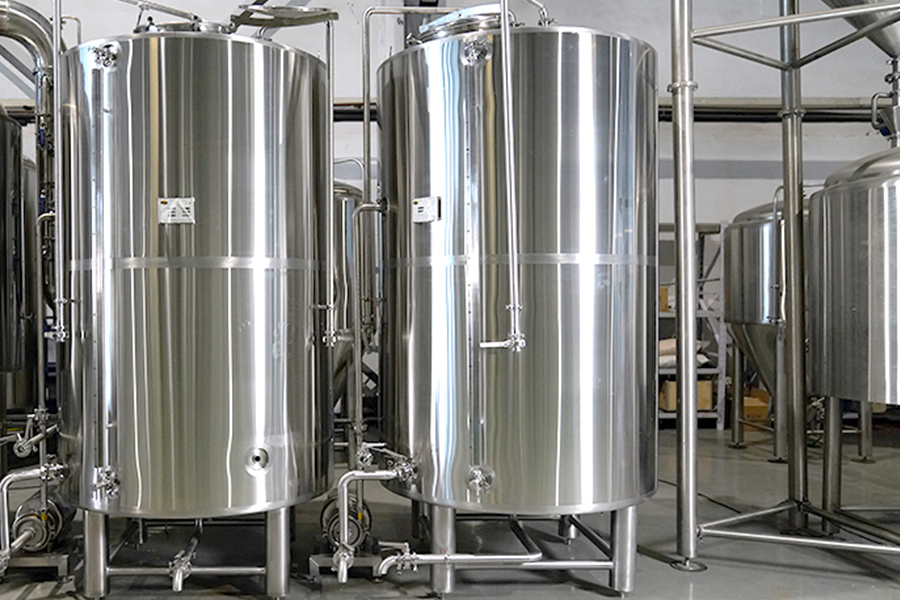
Fermentation tanks are core components of beer production. They are used for yeast fermentation and associated temperature and pressure control. Their capacities and quantities directly affect the ability of the brewhouse to operate continuously.
Tank selection should be based on the volume of wort per batch, fermentation cycle, and filling ratio. Adequate headspace must also be provided. Other important considerations include cooling jackets, temperature control, pressure protection, cleaning spray devices, and drainage design.
For high-capacity production lines, operating multiple fermentation tanks in parallel generally provides greater flexibility in scheduling different batches and products. However, the actual number of tanks should also account for production schedules, cleaning time, and maintenance requirements.
Maturation Tanks
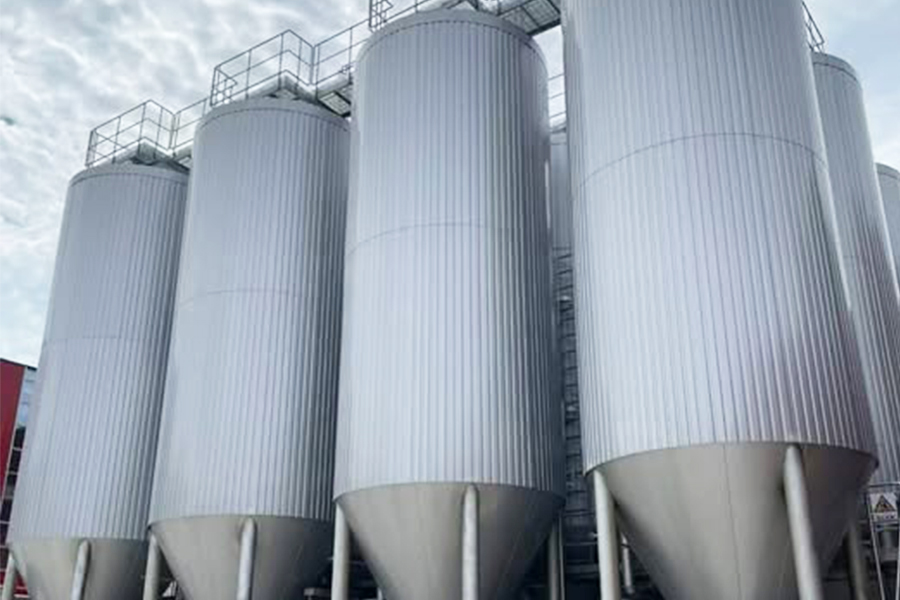
Maturation tanks are primarily used for post-fermentation conditioning, low-temperature storage, and beer stabilization. Whether separate maturation tanks are required depends on the product process and the need to maintain fermentation tank turnover.
If fermentation tanks can also accommodate maturation without delaying subsequent production, the number of dedicated maturation tanks can be reduced.
For breweries with longer maturation periods, high pressure on fermentation tank turnover, or requirements for separate product handling, dedicated maturation tanks can improve production flexibility.
Bright Beer Tanks
Bright beer tanks are used to store beer that meets the required quality standards while awaiting further processing or packaging. They provide a necessary buffer between filtration and packaging operations.
Their capacities and quantities should be determined by considering batch processing volumes, packaging line speeds, operating hours, product changeover frequency, and cleaning cycles. Multiple bright beer tanks allow breweries to schedule packaging operations more flexibly and reduce downtime caused by waiting for beer or changing products.
The exact location of bright beer tanks depends on the process flow. For example, in a system where beer enters the tanks after filtration, the bright beer tanks are typically installed downstream of the filtration system.
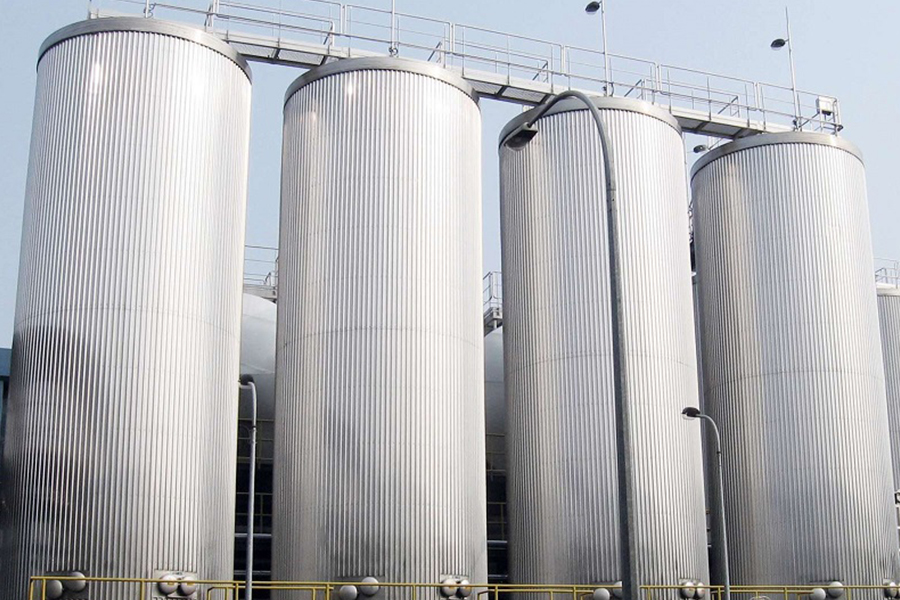
How to Determine Tank Capacity and Quantity
The key to tank design is meeting production flow requirements and process holding times while accounting for filling ratios, cleaning time, equipment maintenance, and production fluctuations.
Fermentation Tank Capacity
The total working volume required for the fermentation system can be initially estimated using the average daily wort input and the average tank occupancy period:
Required fermentation working volume = Average daily wort input × Average tank occupancy period
For example, suppose a brewery transfers 20,000 liters of wort into its fermentation system each day, with an average tank occupancy period of 14 days.
The calculation is: 20,000 × 14 = 280,000 liters, or 280 m³.
This means that the fermentation system requires approximately 280 m³ of total working volume. If each fermentation tank has an effective working volume of 20,000 liters, the theoretical requirement is 14 tanks.
It is important to note that 280 m³ represents the total working volume, not the tanks’ geometric gross volume. Actual equipment selection must also account for fermentation headspace, wort volume per batch, tank cleaning and maintenance schedules, and the timing of filling and emptying different batches. When selecting tanks based on nominal gross volume, the required volume must be adjusted according to the actual filling ratio.
In addition, the number of fermentation tanks must support the planned production schedule and continuous wort feeding requirements. Calculating the total volume alone may not accurately reflect the actual number of tanks required under a specific batch scheduling arrangement.
Maturation Tank and Bright Beer Tank Capacity
The required maturation tank working volume can be initially estimated using the following formula:
Required maturation tank working volume = Average daily beer volume entering maturation × Average maturation time
For example, if 20,000 liters of beer enter the maturation stage each day and the average maturation period is five days, the estimated working volume required is: 20,000 × 5 = 100,000 liters, or 100 m³.
Bright beer tank capacity should focus on the actual buffering requirements before packaging. For batch-based production, the calculation should consider the volume of each batch, packaging duration, packaging line schedules, and product changeover frequency. For continuously operating systems, the required capacity can be estimated based on average flow rate and the desired buffering time.
Maturation tanks and bright beer tanks serve different purposes and have different turnover patterns. Their capacities should therefore be calculated separately rather than using the same configuration formula without adjustment.
Hot Water Tank and Cold Water Tank Capacity
Hot water tank capacity should be determined by peak water demand for mashing, lautering, and cleaning, with additional verification based on heating power, replenishment rates, and intervals between water usage.
Cold water tanks or chilled water storage tanks should be designed according to wort cooling heat loads, cooling media flow rates, allowable temperature rises, and the continuous cooling capacity of the refrigeration system.
For high-capacity production lines, particular attention should be paid to concentrated demand over short periods. Meeting total daily water consumption or cooling requirements does not necessarily guarantee a stable supply during peak demand. Both storage capacity and the continuous processing capacity of supporting equipment must be verified.
How to Select Tank Materials and Structures
Tank selection involves more than capacity. Hygiene requirements, media characteristics, operating temperatures, pressure conditions, and long-term operating costs must also be considered.
Material Selection
Stainless steel is commonly used in beer production equipment. Grade 304 stainless steel is suitable for many standard process applications, while grade 316L stainless steel may be considered for specific corrosive environments or more demanding process requirements. The final selection should be based on the process media, cleaning agents, and actual operating conditions.
Hygiene and Cleaning
The tank’s internal surface, welds, connections, and drainage structures should be designed for effective cleaning, minimizing residual liquid and areas where contamination could accumulate.
For systems requiring clean-in-place (CIP) operations, cleaning spray devices, piping, and drainage facilities should also be properly configured.
Insulation and Temperature Control
Hot water tanks should be equipped with appropriate insulation based on the required temperature retention performance. Fermentation and maturation tanks should be fitted with cooling jackets and temperature control systems suitable for their respective process temperatures.
Pressure and Safety
For tanks designed to operate under pressure, the design, manufacture, and inspection processes must comply with the applicable regulations and standards based on the design pressure and operating conditions. Appropriate pressure monitoring and safety protection devices must also be installed.
Automation
Depending on production requirements, tanks can be equipped with level, temperature, and pressure sensors, as well as automated valves. These features help improve material scheduling, temperature regulation, and equipment status monitoring, thereby increasing overall production management efficiency.
How to Optimize Tank Layout and Supporting Systems
A well-planned tank layout can shorten material transfer distances, reduce operational waiting times, and create opportunities for future capacity expansion.
First, production areas for brewing, fermentation, maturation, filtration, and packaging should be arranged according to the actual process flow. Piping routes, equipment clearances, drainage conditions, and maintenance access must all be considered to avoid unnecessary transfer and maintenance costs caused by poor layout planning.
Second, a tank utilization and cleaning schedule should be established to clearly define the production status, cleaning progress, and availability of each tank. For breweries producing multiple beer varieties, optimizing batch scheduling and tank allocation can reduce equipment downtime associated with product changeovers.
Finally, any tank capacity expansion must be evaluated alongside the supporting infrastructure, including refrigeration systems, CIP cleaning systems, pumps, piping, carbon dioxide management, and wastewater treatment facilities.
Only when the processing capacities of all stages are properly matched can additional tanks translate into genuine increases in production capacity.
Choose the Right Tank Configuration to Support Brewery Expansion
Configuring tanks for a high-capacity brewery is not simply a matter of adding more equipment. The objective is to build a coordinated, efficient, and scalable tank system based on target production volume, process duration, batch scheduling, and equipment turnover rates.
A well-designed configuration should meet current production requirements while avoiding idle equipment and unnecessary capital investment. It should also provide sufficient flexibility for future product changes and capacity expansion.
If you are planning a new brewery, expanding existing production capacity, or upgrading brewing equipment, Tiantai can provide customized brewing equipment and tank configuration solutions based on your target output, beer varieties, production processes, and facility conditions. Our solutions are designed to help breweries optimize equipment investment, improve production efficiency, and ensure stable operation while supporting future expansion.