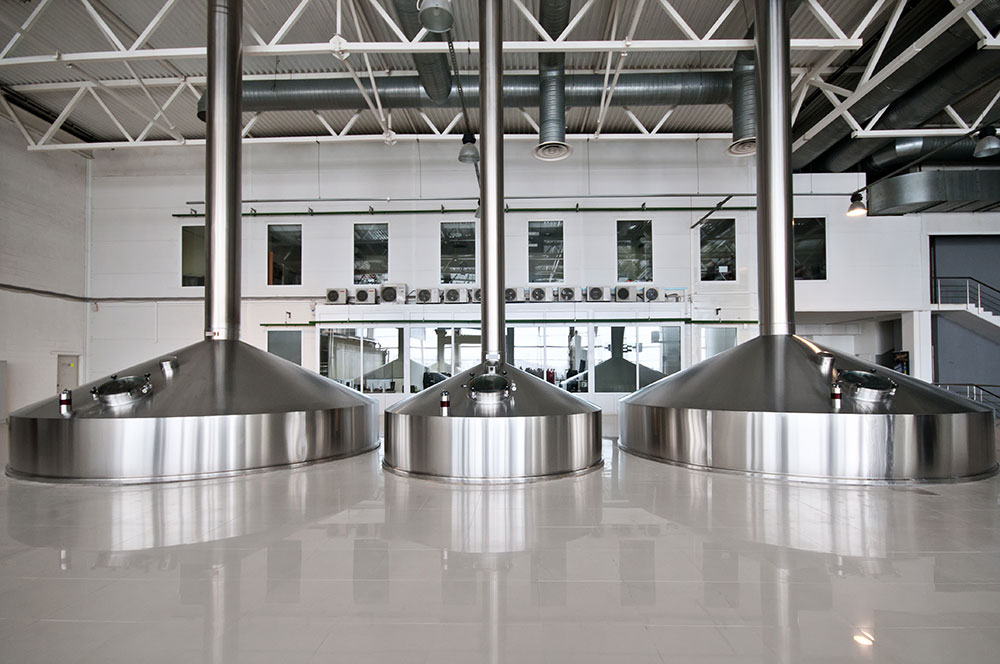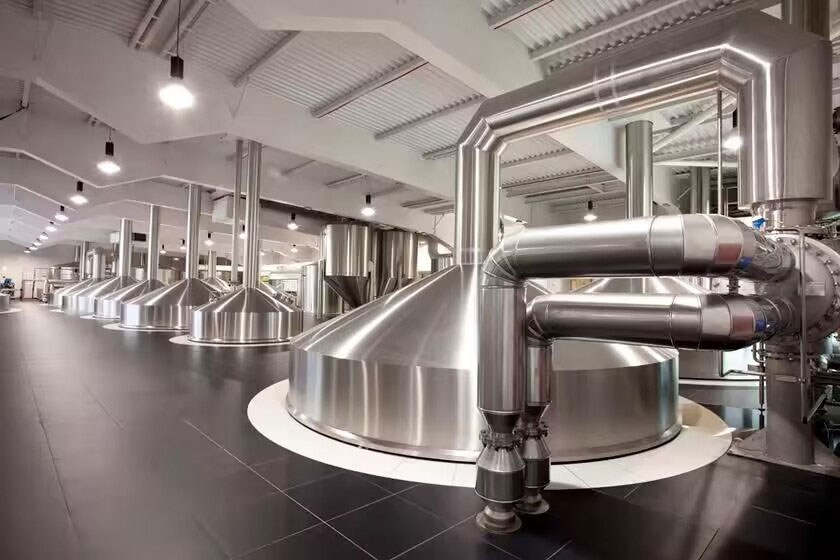

When designing a large-scale industrial brewery, you may picture an orderly layout of mashing systems and fermentation tanks. But what materials are these vessels made of, and what fabrication processes are applied? Will equipment quality remain identical when built with different materials and manufacturing techniques? Today, Tiantai offers a detailed breakdown.
In fact, brewery equipment marketed as “304 stainless steel” can vary drastically in service life, hygienic safety and brewing performance, depending on steel grade, welding procedures and surface polishing tolerance. This very distinction separates professional beer equipment manufacturers from mere equipment resellers/assemblers.
So what engineering attributes define fully qualified modern beer brewing systems?
I. Materials
Nearly all stages of beer production — mashing, lautering, boiling, whirlpooling, fermentation and bright beer storage — involve direct contact with process liquids under complex chemical conditions including acids and alkalis. Material selection is the primary determinant of equipment quality.
- From 304 to 316L: Not Merely Higher Cost, but Better Suitability
304 stainless steel is the baseline construction material, containing approximately 18% chromium and 8% nickel, delivering good corrosion resistance and cleanability. 316L stainless steel adds molybdenum to the 304 formulation, offering superior resistance to chloride attack and intergranular corrosion. For breweries producing fruit wine or fermenting acidic media, Tiantai prioritizes 316L to meet corrosion resistance requirements for special feedstocks.
Critical note: “304 stainless steel” and “food-grade 304 stainless steel” are not interchangeable terms. Food-grade stainless steel is manufactured to stringent hygienic specifications with strict limits on hazardous elements such as lead and chromium, supported by relevant certifications. Equipment advertised simply as “304 stainless steel” cannot match the hygienic safety level of vessels certified food-grade.
- Material Specs Determine Performance: Looks Are Not Enough
In commercial brewing, stainless steel plate thickness directly governs pressure rating and service longevity. Especially in large-scale breweries, fermentation tanks operate under working pressure, typically 0.1–0.3 MPa. Plate thickness and head forming quality directly affect equipment safety and durability.
II. Fabrication Processes
Identical engineering drawings can yield vastly different equipment quality when manufactured by different suppliers.
- Cutting & Blanking
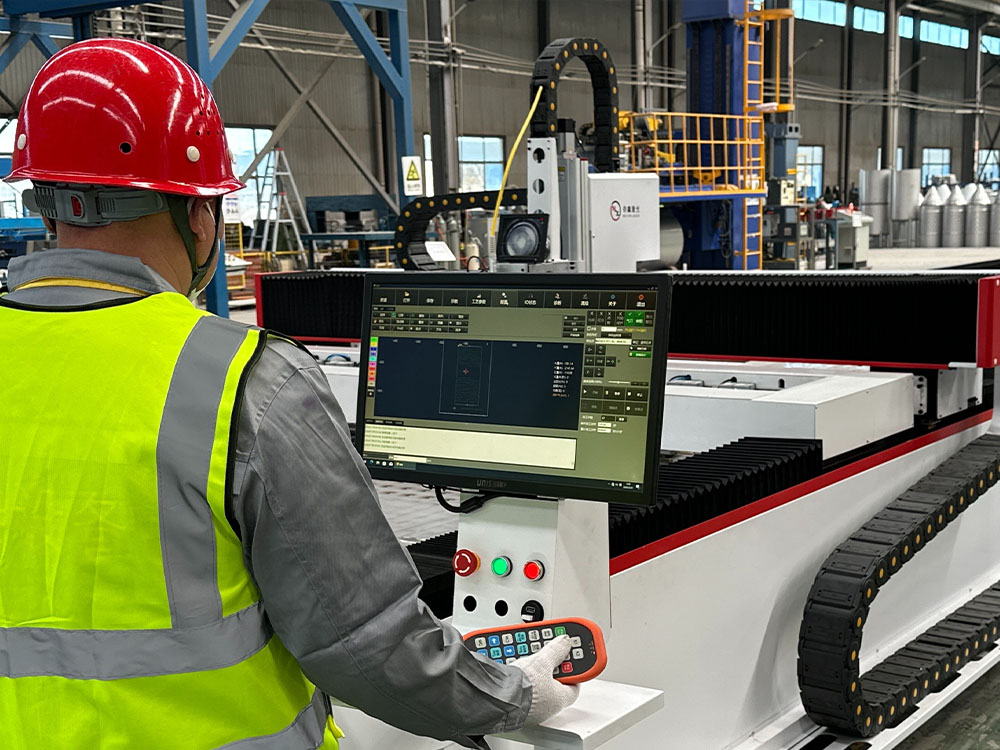
Modern beer equipment manufacturing has moved beyond manual fabrication. Professional manufacturers deploy automated plasma cutting and laser cutting to guarantee consistent edge precision. Laser cutting achieves tolerance within 0.1 mm for accurate profiling of tank shell plates; plasma cutting excels for thick plate processing. These advanced blanking operations lay the foundation for subsequent welding and forming accuracy.
- Welding
Any defective weld can become a breeding ground for microorganisms, or lead to cracking and leakage during operation. Tiantai adopts Tungsten Inert Gas (TIG) welding as the primary welding process. TIG welding uses pure argon shielding to isolate oxygen and nitrogen from ambient air, preventing weld oxidation and ensuring weld density and smooth finish. Automated welding systems regulate current, travel speed and gas flow to deliver uniform weld quality across all seams. Plasma welding is additionally applied for large-bore piping and tank assemblies to further boost weld integrity and production efficiency.
- Internal Surface Polishing
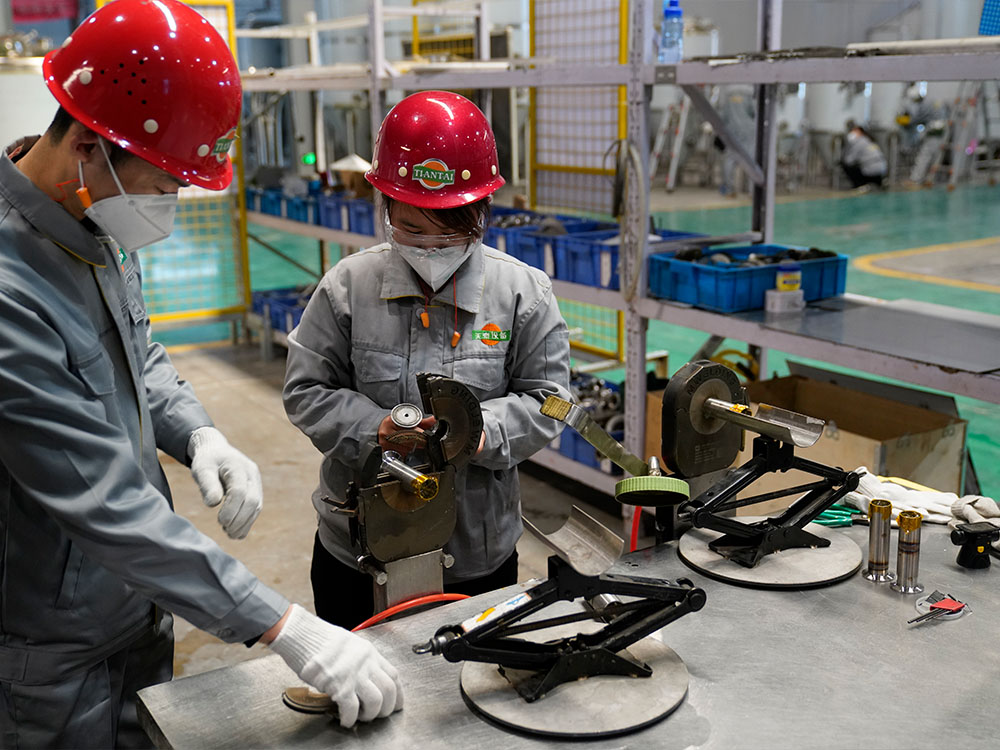
Polishing is an often-underestimated manufacturing step that demonstrates a fabricator’s capability.
Why polishing is mandatory? The inner shell of beer vessels is in direct contact with brewing water and wort, requiring ultra-high hygienic standards. Surface roughness is quantified by Ra value; lower Ra indicates a smoother surface. The globally accepted hygienic standard mandates internal surface finish ≤0.6 μm Ra. Tiantai applies stricter internal standards, targeting mirror finish at Ra ≤0.4 μm or finer.
How is mirror polishing achieved? Our process sequence: rough grinding → intermediate grinding → fine grinding → mirror polishing. Progressive abrasive belts and polishing wheels reduce surface roughness from tens of micrometers down to sub-micron level.
Mirror polishing serves more than aesthetic purposes. Smooth surfaces minimize liquid retention and microbial adhesion, eliminating sanitary dead zones. Moreover, polishing forms a dense passive oxide layer on stainless steel, significantly improving corrosion resistance and extending equipment service life.

- Pickling & Passivation
Welding generates high-temperature oxide layers (golden-blue heat tint) which degrade stainless steel corrosion resistance. Pickling and passivation removes oxide scale, heat tint and rust spots using specialized pickling solutions (e.g. nitric acid), restoring the metallic silver surface. More importantly, passivation develops a dense chromium-rich passive film on stainless steel — this film is the fundamental reason stainless steel resists rust. Stainless steel without proper passivation is highly susceptible to pitting corrosion and rusting in humid environments.
- Thermal Insulation
Precise temperature control during mashing and fermentation directly impacts beer quality and energy consumption. Tiantai tanks adopt high-pressure polyurethane foam insulation with a typical thickness of 80–100 mm. This high-density polyurethane foam limits heat loss during mashing to under 5%, cutting energy costs substantially. For large-scale production, this translates directly into tangible operational cost advantages.
III. Tiantai Delivers Quality Beer with Proven Engineering Competence
You may ask: “These processes sound impressive, but which manufacturer can truly deliver on these promises?”
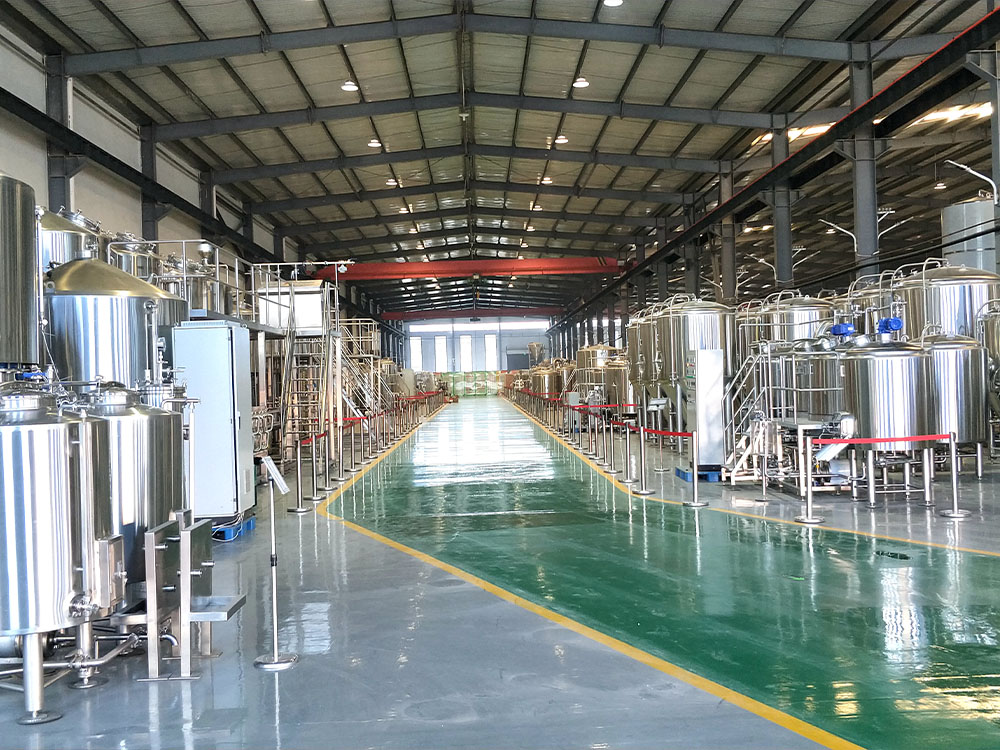
As a manufacturer specializing in beer brewing equipment, Shandong Tiantai Beer Equipment Co., Ltd. provides full-spectrum services including brewery layout design, custom special equipment fabrication, production, shipment, installation and commissioning. What we supply is not merely “a set of equipment”, but fully engineering-verified brewing solutions.
Please feel free to contact Tiantai for further information on brewery construction projects.