
A well-designed brewhouse can produce highly consistent wort, yet identical wort does not always produce identical beer.
Many breweries eventually discover that recipe formulation accounts for only part of product consistency. The environment in which fermentation takes place—including pressure, temperature, circulation, cooling performance, and process timing—continues to influence beer long after yeast has been pitched.
For breweries producing the same beer week after week, controlling this fermentation environment becomes just as important as selecting the right malt or yeast strain.
In this article, we explore how modern fermentation systems create stable operating conditions that improve beer consistency, simplify cellar management, and support predictable production at commercial scale.
Fermentation Consistency Is Built on Stability
When brewers evaluate fermentation performance, attention often focuses on the final gravity or alcohol content. These values certainly indicate whether fermentation has finished successfully, but they reveal very little about how fermentation progressed. Two batches may reach identical attenuation while following completely different metabolic pathways. Small variations in temperature, dissolved carbon dioxide, hydrostatic pressure, or yeast suspension can influence ester formation, sulfur reduction, higher alcohol production, and maturation behavior long before differences become visible in analytical measurements.
For this reason, commercial breweries increasingly monitor fermentation as a dynamic process rather than a series of isolated checkpoints.
Maintaining stable conditions throughout fermentation allows yeast to work within a predictable environment, reducing biological stress and improving batch reproducibility. Consistency is therefore achieved not by correcting problems after they occur, but by minimizing process variation from the very beginning.
Why Fermenter Height Changes Yeast Behavior
One characteristic unique to commercial fermentation vessels is their height.
As breweries expand production, fermenters become progressively taller in order to maximize cellar capacity without increasing building size. While this approach improves space utilization, it also changes the physical environment experienced by yeast.
The deeper the liquid column becomes, the greater the hydrostatic pressure acting on yeast cells near the bottom of the vessel. Unlike external tank pressure, hydrostatic pressure increases gradually with liquid depth. Consequently, yeast located near the cone experiences different physical conditions from yeast suspended closer to the beer surface.
Although the pressure differences appear relatively small, they influence several important biological processes.
Higher dissolved carbon dioxide concentrations surrounding yeast cells may reduce reproduction rates, alter membrane transport, and suppress the formation of certain fermentation esters.
These effects are often beneficial for clean-fermenting lager beers but may require different fermentation strategies for beer styles that rely on expressive yeast character. The relationship between vessel height and beer flavor illustrates why fermentation engineering extends beyond simple tank fabrication. Selecting fermenter dimensions should always consider the intended beer portfolio rather than production volume alone.
Cooling Systems Influence More Than Temperature
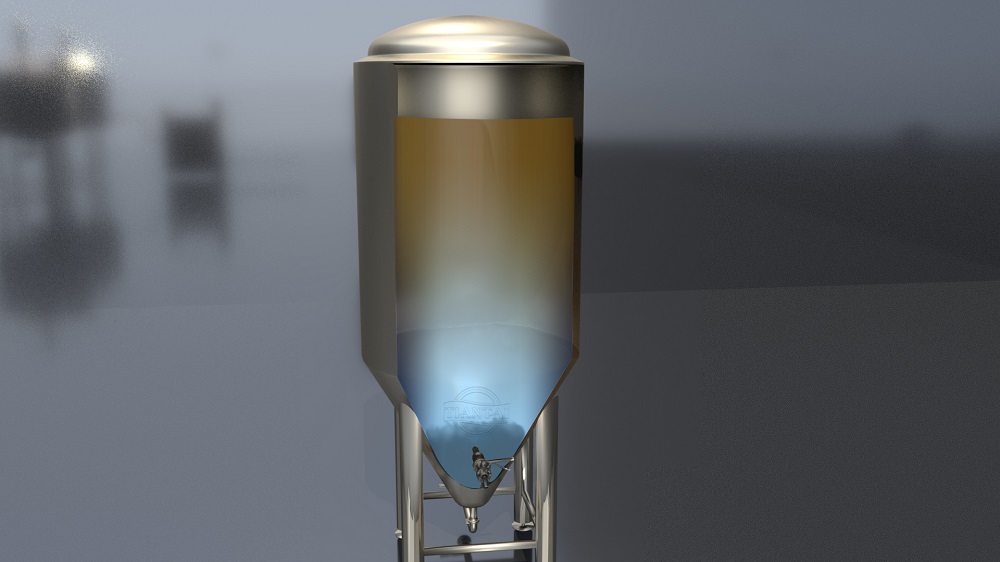
Cooling jackets are commonly viewed as temperature-control equipment. In practice, they perform a much broader process function. During active fermentation, yeast continuously generates metabolic heat. If this heat is removed unevenly, temperature gradients begin developing throughout the fermenter. These differences affect yeast activity, convection intensity, and ultimately fermentation uniformity. Modern brewery fermenters, therefore, divide cooling into multiple independently controlled zones rather than relying on a single cooling surface.
This configuration allows brewers to regulate heat removal according to fermentation stage.
During vigorous fermentation, stronger circulation keeps yeast evenly suspended throughout the vessel. Later, gradual adjustments to cooling intensity encourage flocculation and natural clarification without creating unnecessary thermal stress. Cooling design therefore influences both fermentation efficiency and beer quality.
Rather than asking how much cooling capacity a fermenter requires, breweries increasingly ask how precisely cooling can be controlled throughout different phases of fermentation.
This shift reflects the growing importance of process engineering within modern brewery design.
At Tianati, fermentation systems are developed around this principle. Multi-zone glycol jackets, automated temperature control, and balanced cooling layouts are selected according to production requirements rather than standardized equipment configurations. The objective is not simply to cool the beer, but to create stable conditions that allow yeast to perform consistently throughout every fermentation cycle.
Process Monitoring Improves Decision-Making
Historically, many breweries relied on fixed fermentation schedules. Beer might remain in the fermenter for seven days, ten days, or two weeks regardless of the actual condition of the yeast.
Modern breweries increasingly rely on process data instead. Measurements such as apparent attenuation, tank pressure, temperature profiles, yeast viability, dissolved oxygen, and diacetyl concentration provide a much more accurate picture of fermentation progress than production calendars alone.
This data-driven approach allows breweries to make operational decisions according to biological conditions rather than assumptions. The result is greater consistency while avoiding unnecessary tank occupancy.
Digital process monitoring also improves traceability.
When every fermentation parameter is recorded automatically, breweries can compare successful batches, identify process deviations more rapidly, and optimize production using objective information rather than trial and error. Automation therefore supports brewing expertise rather than replacing it.
Experienced brewers remain responsible for interpreting fermentation behavior, while modern control systems provide the reliable information needed to make better decisions.
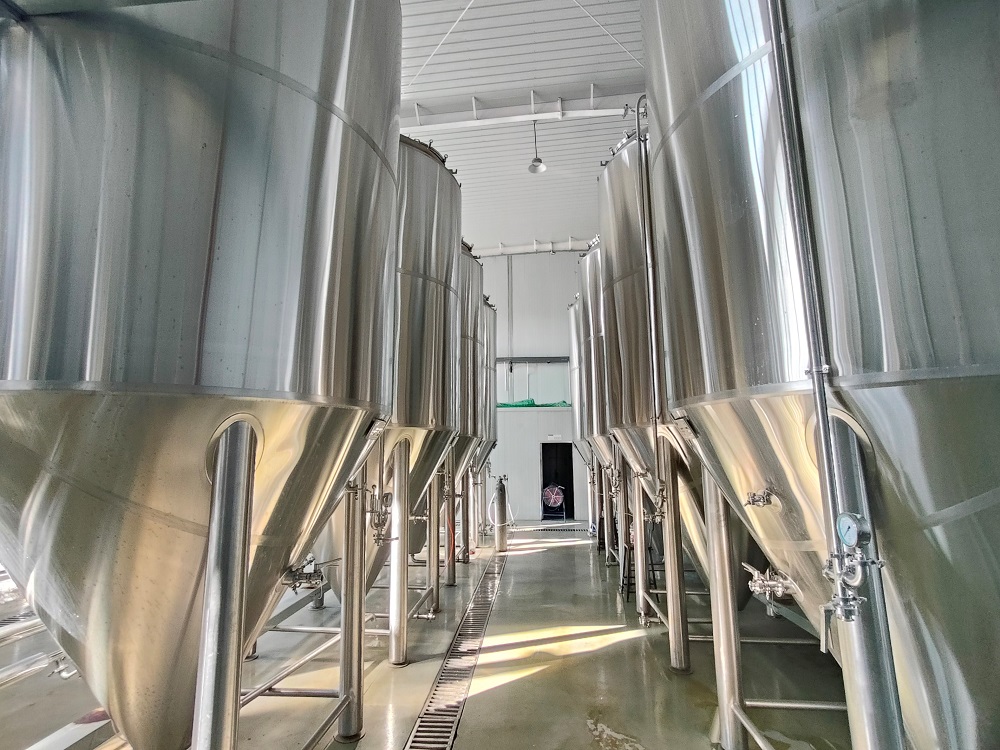
Beer Transfer Is Part of Fermentation, Not the End of It
One common misconception is that fermentation ends once the desired final gravity has been reached. In reality, yeast continues performing important metabolic activities even after most fermentable sugars have disappeared.
Compounds such as diacetyl, acetaldehyde, and sulfur-containing intermediates continue changing during the later stages of fermentation and early maturation. The timing of beer transfer, therefore, influences much more than production scheduling. Transferring beer too early may interrupt these natural cleanup reactions. Waiting excessively long may increase the risk of yeast autolysis or unnecessarily occupy valuable cellar capacity.
Successful breweries balance these competing priorities by evaluating fermentation progress rather than following fixed timelines. Some operations transfer beer with a small amount of residual extract remaining, allowing fermentation to continue gradually during cooling. Others retain beer in the cylindroconical fermenter until clarification has progressed further before moving it to maturation. Neither approach is universally correct.
The appropriate strategy depends on beer style, yeast strain, production objectives, and overall brewery workflow.
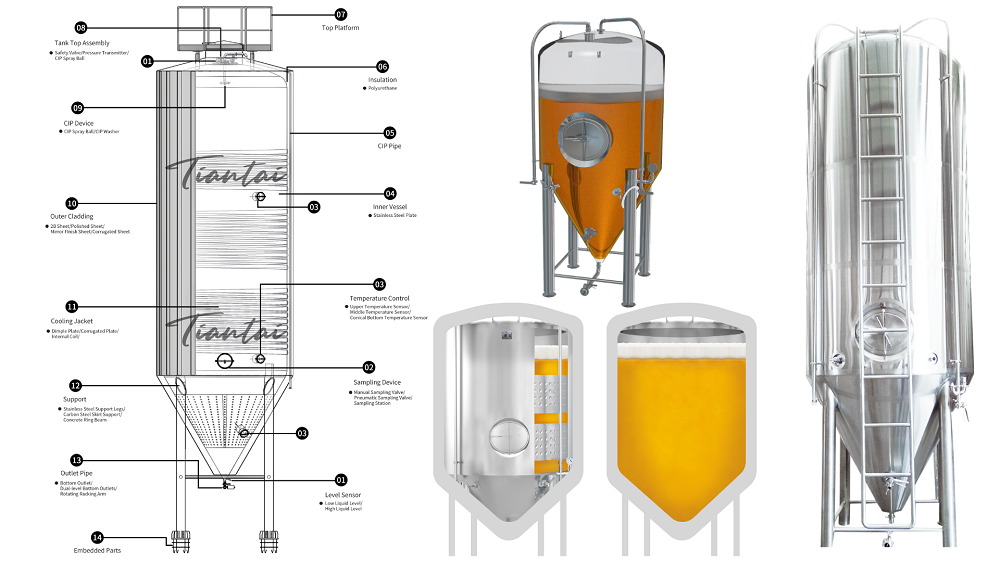
For this reason, fermentation vessels should be equipped with reliable sampling points, accurate temperature measurement, pressure monitoring, and hygienic transfer systems that allow brewers to make informed decisions throughout the fermentation cycle.
Integrated CIP capability further ensures that each new batch begins under consistently sanitary conditions without extending production downtime.
Rather than viewing beer transfer as a routine movement between tanks, modern breweries increasingly recognize it as one of the final process-control decisions that influence flavor stability, clarification efficiency, and production consistency.
Looking Ahead
Successful fermentation extends beyond yeast growth and temperature control.
Maintaining healthy yeast populations also requires effective management of trub, cold break, and sanitation throughout the fermentation cellar.
In Part 4, the final article in this series, we examine how cold break removal, hygienic fermenter design, and integrated brewery engineering contribute to long-term fermentation performance and sustainable brewery operation.