
Every brewer understands the importance of healthy yeast, but successful fermentation is rarely determined by yeast alone. In commercial breweries, fermentation performance is shaped by an entire process system that includes wort oxygenation, tank geometry, cooling design, filling strategy, and process control. These engineering factors influence how yeast grows, reproduces, and ultimately transforms wort into finished beer.
At Tiantai, we work with breweries at different stages of development—from new craft brewery startups to expanding commercial operations. One lesson remains consistent across projects: many fermentation problems that appear to be caused by yeast are actually rooted in equipment design or process configuration.
This four-part technical series examines fermentation from an engineering perspective. Instead of discussing recipes or brewing styles, we focus on how fermenter design influences biological performance and how breweries can achieve greater consistency through better process engineering.
In this first article, we explore the relationship between yeast pitching, oxygen management, and internal circulation—the three factors that establish the foundation for every successful fermentation.
Healthy Fermentation Starts Before Fermentation Begins
Many breweries concentrate on fermentation temperature once yeast has been pitched. In reality, the most important decisions are often made during the final minutes before wort enters the fermenter.
During this stage, yeast is expected to transition from a dormant storage condition into an actively reproducing population capable of completing fermentation quickly and consistently. To accomplish this, yeast requires three essential conditions:
- Adequate cell numbers
- Sufficient dissolved oxygen
- Uniform distribution throughout the wort
Weak performance in any one of these areas can influence the entire fermentation cycle.
For standard-strength beers, commercial breweries commonly target pitching rates around 15 million viable cells per milliliter, although the exact requirement depends on beer style, original gravity, fermentation temperature, and the physiological condition of the yeast itself.
Pitching rate should therefore be considered a process parameter rather than a universal specification. Under-pitching often increases yeast stress and prolongs lag time, while excessive pitching may suppress yeast growth and reduce the formation of desirable fermentation esters.
Finding the appropriate balance remains one of the first engineering decisions in fermentation management.
Oxygen: A Controlled Nutrient Rather Than an Ingredient
Unlike finished beer, fresh wort benefits from carefully controlled oxygen exposure.
During the initial growth phase, brewing yeast consumes oxygen to synthesize sterols and unsaturated fatty acids that strengthen cell membranes. These compounds allow yeast to withstand increasing alcohol concentrations during fermentation while maintaining efficient nutrient transport.
Because oxygen is consumed rapidly after pitching, its distribution throughout the fermenter is often more important than the total amount added.
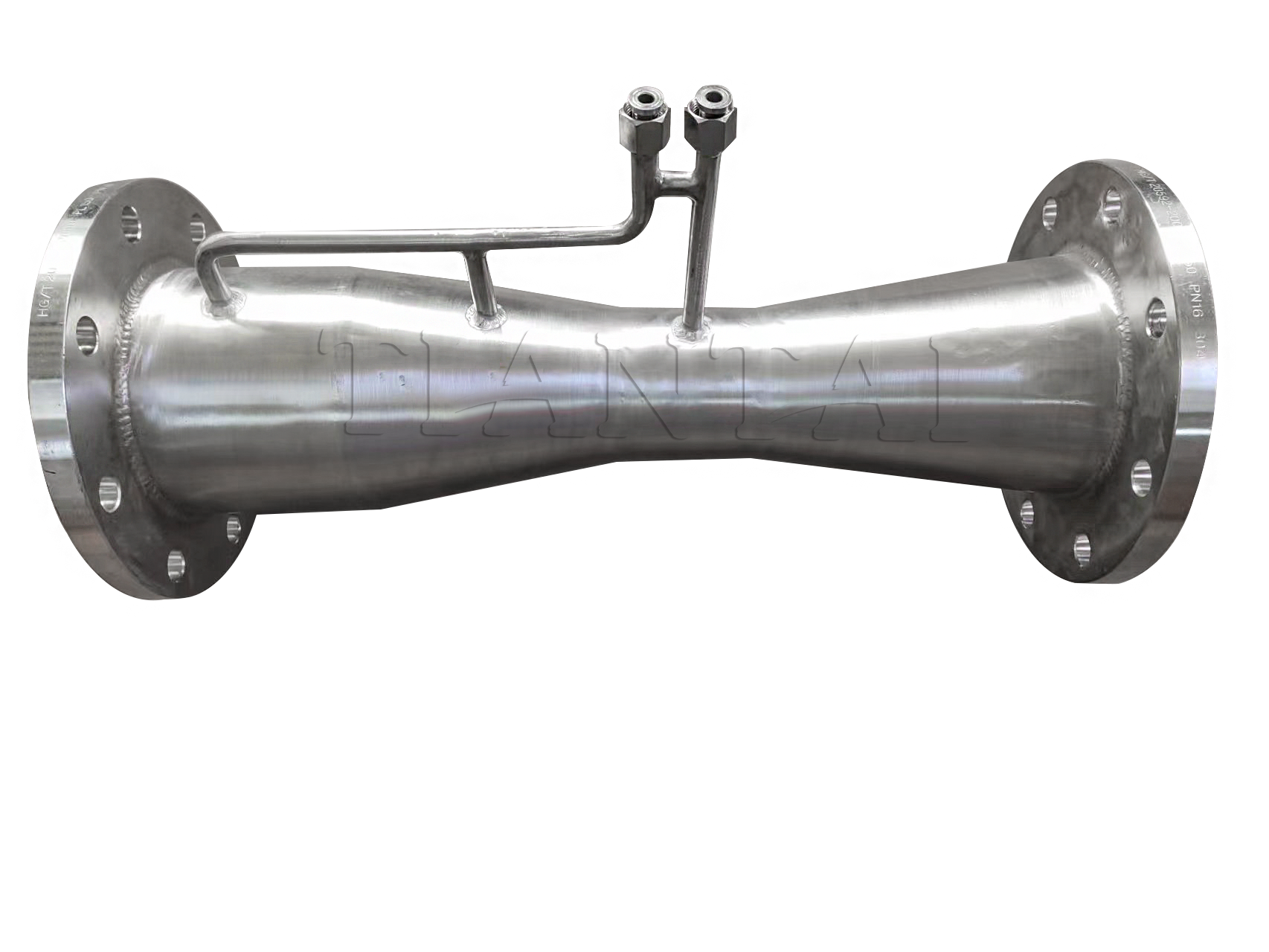
Large commercial breweries generally inject oxygen inline immediately before the fermenter. Positioning the yeast dosing point downstream from the oxygen injection system allows yeast to enter fully oxygenated wort while avoiding unnecessary mechanical stress created by Venturi injectors or static mixers.
This seemingly minor detail can improve yeast viability during the earliest stages of fermentation, particularly in high-gravity brewing where healthy membrane development becomes increasingly important.
However, oxygen management becomes more complicated when a fermenter is filled over multiple brews.
Some breweries intentionally oxygenate only the first portion of wort entering the vessel while leaving later fills unaerated. This practice can improve flavor stability by encouraging appropriate sulfur dioxide production during fermentation, but it also increases the possibility that different layers inside the fermenter develop slightly different oxygen concentrations.
Without sufficient mixing, these variations may influence early yeast activity before natural circulation becomes fully established.
Why Uniform Wort Distribution Matters
Many brewers assume that pumping wort into a fermentation vessel at high velocity automatically creates complete mixing.
Fluid dynamics inside tall cylindroconical fermenters tell a different story.
Incoming wort may differ slightly in temperature, extract concentration, dissolved oxygen, or yeast density compared with wort already inside the vessel. Even turbulent filling does not always eliminate these differences immediately. Instead, localized regions with different physical characteristics may temporarily develop inside the tank until natural convection gradually redistributes the liquid.
Although these differences usually disappear during active fermentation, minimizing them from the beginning helps establish more predictable fermentation behavior.
This explains why modern fermenters place increasing emphasis on inlet design rather than simply increasing transfer speed.
Carefully positioned inlet ports encourage controlled circulation patterns that distribute wort throughout the vessel while avoiding excessive turbulence that could damage yeast cells or increase unwanted oxygen pickup.
At Tiantai, fermenters are designed with this principle in mind. Smooth sanitary interiors, optimized inlet orientation, and fully drainable process piping help maintain consistent wort distribution while supporting hygienic operation throughout repeated production cycles.
Rather than treating a fermenter as a storage tank, the design focuses on creating a controlled biological environment where yeast can perform under stable and repeatable conditions.
Internal Circulation: The Hidden Mixing System Inside Every Fermenter
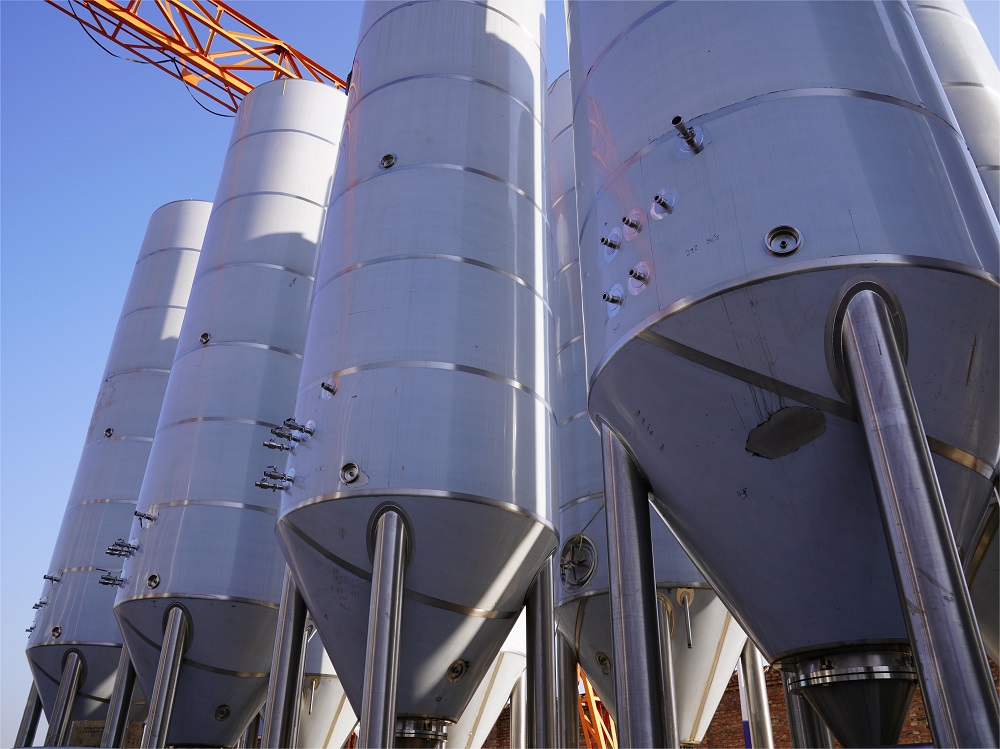
Once fermentation begins, yeast itself becomes the driving force behind liquid movement. Heat generated by fermentation, together with rising carbon dioxide bubbles and glycol cooling along the vessel wall, creates continuous circulation throughout the fermenter.
Unlike mechanical agitators used in other fermentation industries, breweries rely almost entirely on these naturally occurring convection currents. The resulting circulation performs several important functions simultaneously.
It distributes nutrients throughout the fermenting wort, equalizes temperature across the vessel, prevents localized yeast depletion, and maintains relatively homogeneous dissolved carbon dioxide concentrations.
These effects become increasingly valuable as fermenter volume grows.
A vessel holding several hundred hectoliters may contain a liquid column exceeding ten meters in height. Without sufficient natural circulation, relatively small temperature differences could develop into measurable variations in fermentation rate, ultimately affecting flavor consistency across the batch.
Cooling strategy also influences convection intensity.
Independent glycol jackets positioned along different sections of the vessel allow brewers to regulate circulation according to fermentation stage. Early in fermentation, stronger circulation helps maintain yeast suspension and encourages efficient sugar utilization. Later, reducing convection supports yeast flocculation and prepares the beer for clarification and harvesting.
Instead of serving solely as a refrigeration system, modern cooling jackets have become an active process-control tool.
This is one reason why fermentation equipment should always be evaluated as part of the overall brewery process rather than as an isolated tank. Cooling capacity, vessel proportions, brewhouse output, and production scheduling all interact to determine fermentation performance.
At Tiantai, these relationships form the basis of every fermentation system we design. By integrating vessel engineering with brewing process requirements, breweries can achieve more stable fermentations, healthier yeast populations, and greater batch-to-batch consistency without increasing operational complexity.
Looking Ahead
The first hours of fermentation establish conditions that influence every stage of beer production. Healthy yeast, effective oxygen management, and stable internal circulation together create the environment required for reliable fermentation performance.
In Part 2 of this series, we move beyond the beginning of fermentation to examine how cone geometry, yeast sedimentation, and tank filling strategy affect yeast recovery, beer quality, and long-term production efficiency.