
In modern commercial beer production, energy consumption is a significant factor affecting production costs. Processes such as malting, wort boiling, hot water preparation, CIP cleaning, and pasteurization all require substantial amounts of heat energy.
Steam, due to its high heating efficiency, stable temperature, and ease of control, is widely used in medium to large-scale breweries. However, in traditional production processes, steam generated during wort boiling, high-temperature condensate, and waste heat from boiler flue gas are often directly emitted, resulting in significant energy waste.
Therefore, steam recovery systems have gradually become an important technology for modern commercial breweries to improve energy efficiency. By recovering the steam and waste heat generated during production and reusing them for hot water preparation, wort preheating, CIP cleaning, and boiler feedwater, breweries can effectively reduce energy consumption and production costs.
Why do breweries need steam recovery systems?
Beer production is inherently a process that requires a large amount of heat energy. Among these processes, wort boiling is one of the main heat energy-consuming stages.
During the wort boiling process, continuous heating is required to concentrate the wort, sterilize it, extract bitter substances from hops, and remove undesirable volatile compounds. This process generates a large amount of high-temperature steam. If this steam is directly released into the air, the heat energy it carries is wasted. Simultaneously, the steam condenses in heat exchange equipment to form high-temperature condensate. This condensate still has a high temperature; direct discharge not only wastes heat energy but also increases energy consumption for boiler feedwater and reheating.
Therefore, modern brewery steam recovery systems typically include multiple parts such as steam condensation, heat exchange, hot water storage, condensate recovery, and automated control. It is a complete energy recovery system, not just a simple steam collection device.
The Working Principle of a Brewery Steam Recovery System
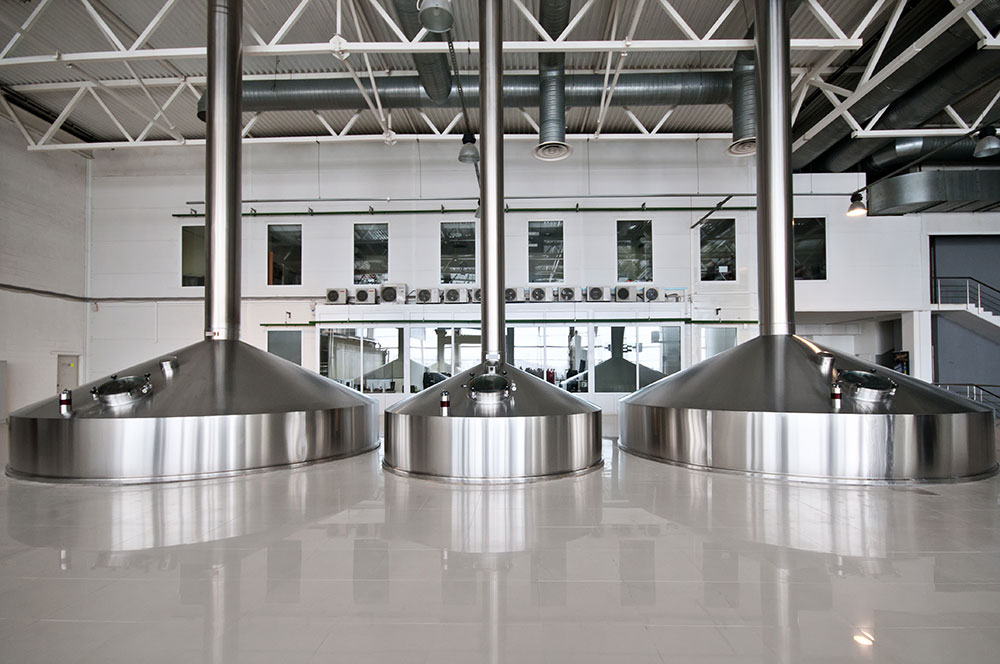
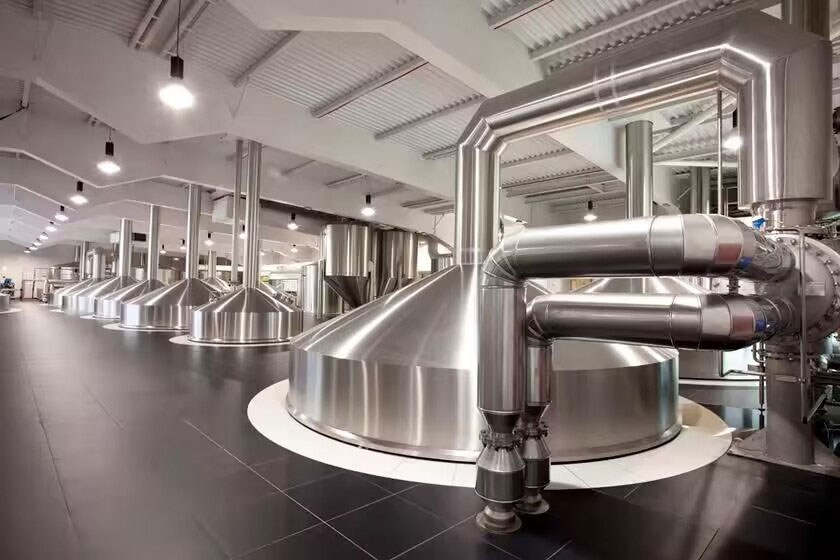
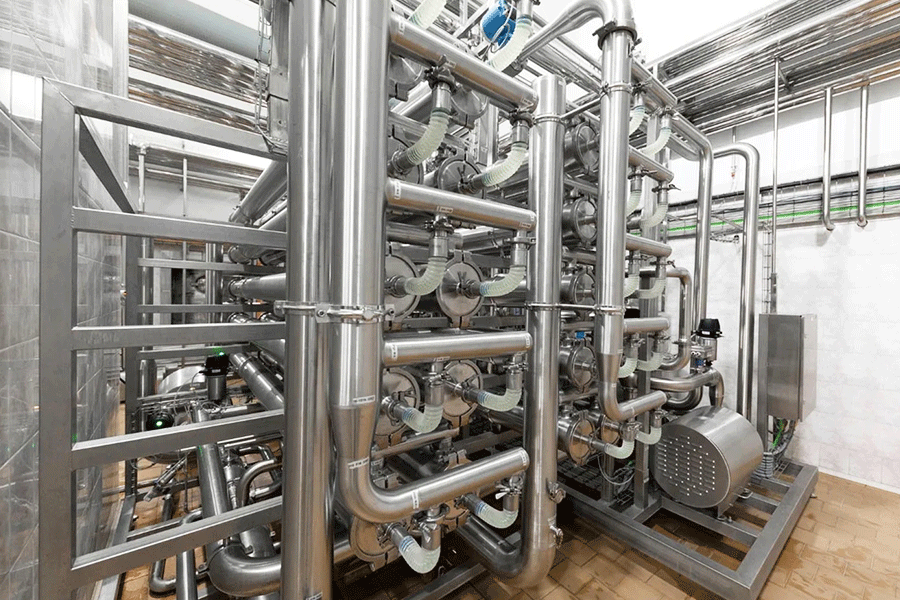
Taking wort boiling steam recovery as an example, the high-temperature steam generated during wort boiling enters the steam condenser or heat recovery heat exchanger through the exhaust pipe. Inside the heat exchanger, the steam indirectly exchanges heat with brewing water or other process water. After releasing heat, the steam condenses into water, while the process water on the other side is heated.
The heated hot water can be stored in a hot water tank and used as needed for:
· Making and scouring
· Wort preheating
· CIP cleaning
· Equipment rinsing
· Boiler feedwater preheating
This allows heat energy that would otherwise be released into the environment to return to the production system, improving overall energy efficiency.
It’s important to note that steam recovery is not simply about directly reusing steam. Wort boiling steam may contain volatile substances from the wort, hop aromas, and organic components. Therefore, indirect heat exchange is typically used to transfer heat to clean process water, thus avoiding any impact on the product system.
Wort Boiling Steam Recovery: One of the Most Valuable Applications
Among various waste heat recovery methods in breweries, wort boiling steam recovery generally has high application value. Steam generated during traditional boiling is directly released. By installing a steam condenser, this steam can be effectively utilized to heat cold water or brewing water into the hot water required for production.
For commercial breweries, hot water demand is usually relatively stable. Processes such as mashing, scouring, CIP cleaning, and equipment rinsing all require large amounts of hot water, thus ensuring the full utilization of recovered heat energy. In continuously operating breweries, recovered hot water can be stored in hot water tanks and scheduled according to the needs of different production stages, thereby reducing boiler steam consumption.
Furthermore, steam recovery can improve the working environment in the brewing workshop. Reducing the direct emission of high-temperature, wet steam helps lower the temperature and humidity in the workshop, reducing condensate dripping and equipment corrosion.
Steam Condensate Recovery: Reducing Boiler Energy Consumption
Besides recovering steam generated from wort boiling, the high-temperature condensate in the steam system also has high recovery value.
Steam condenses into high-temperature water after passing through jackets, heat exchangers, or other heating equipment. Direct emission of this heat energy would be wasted. By installing condensate recovery pipelines, steam traps, flash tanks, and condensate storage tanks, breweries can recover condensate into the boiler feedwater system. Since the temperature of recovered condensate is usually higher than that of fresh feedwater, the boiler does not need to consume a large amount of energy to reheat the cold water, thus reducing fuel consumption. At the same time, condensate recovery can also reduce boiler feedwater volume and the load on the water treatment system.
In large breweries, condensate recovery can be integrated with boiler flue gas waste heat recovery, feedwater preheating, and hot water systems to form a more complete plant-wide energy management system.
How does a steam recovery system reduce brewery production costs?
1. Reduced Fuel Consumption
Boilers consume natural gas, biomass fuel, oil, or electricity to produce steam. By recovering boiling steam and high-temperature condensate, the energy required for heating process water and boiler feedwater can be reduced.
2. Reduced Boiler Peak Load
Processes such as saccharification, boiling, and CIP cleaning may generate significant heat demands at different times. Hot water storage tanks can store recovered heat and use it when needed, thereby reducing the instantaneous load on the boiler.
3. Reduced Fresh Water Consumption
Recovering condensate and waste heat reduces the need for heating fresh water. For areas with high water costs or water scarcity, water conservation can also bring significant economic benefits.
4. Reduced Equipment Operating Costs
Reducing boiler operating time and fuel consumption also helps reduce the operating pressure and maintenance costs of boilers and related energy equipment. Therefore, the economic benefits of steam recovery systems are not only reflected in saving gas or fuel, but also in water conservation, reduced wastewater treatment costs, and reduced equipment operating load.
Does steam recovery affect beer quality?
Steam recovery systems typically use indirect heat exchange. The recovered heat is transferred to brewing water or other process water through a heat exchanger. Steam and condensate do not directly enter the wort or finished beer. Furthermore, by optimizing the heating method and reducing unnecessary heat loss, the system can meet the requirements of the wort boiling process while reducing heat waste caused by overheating. Stable heat supply and precise temperature control also help improve the consistency of beer production between different batches.
What factors need to be considered in the design of a steam recovery system?
The design scheme of the steam recovery system varies depending on the size of the brewery. Small craft breweries with 500L or 1000L capacity have significantly different steam generation and hot water requirements compared to large commercial breweries. When designing a system, the following factors typically need to be considered:
Steam Source and Heat Requirements
It is necessary to understand the brewery’s production scale, daily batch volume, wort boiling time, boiler capacity, and hot water requirements to determine the appropriate recovery system capacity.
Heat Temperature Rating
Different heat sources have different temperatures. High-temperature steam is suitable for high-temperature processes, while lower-temperature waste heat can be used for feedwater preheating, boiler feedwater, or other low-temperature processes.
Hygiene and Safety Design
Brewing plants are food and beverage production environments; heat exchangers, tanks, and piping should use materials and structures that meet hygiene requirements. The system also needs to be equipped with pressure protection, temperature monitoring, level control, and safety venting devices to ensure long-term stable operation.
Cleaning and Maintenance
Wort boiling steam may carry foam and organic matter, which can cause heat exchanger contamination over long-term operation. Therefore, steam condensers, related piping, and tanks should be easy to clean and integrated into the brewery’s CIP (Clean-In-Place) cleaning system to maintain good heat exchange efficiency and hygiene conditions.
Automated Control
Modern steam recovery systems are typically equipped with temperature sensors, pressure sensors, flow meters, and level gauges, and are centrally controlled via PLC or SCADA systems. Operators can monitor steam generation, hot water temperature, condensate recovery, and system operating status in real time, promptly identifying anomalies and improving system stability.
With rising energy prices and increasing energy conservation and emission reduction requirements in the beer industry, the importance of steam recovery systems is becoming increasingly apparent. For companies building new breweries, it is recommended to fully consider steam recovery, condensate recovery, boiler waste heat utilization, and cascaded heat energy utilization during the project design phase, rather than adding energy-saving equipment separately after project completion.
For breweries already in production, energy analysis can be conducted based on existing boiler, boiling, hot water, and CIP systems to identify suitable steam and waste heat recovery solutions.
Future high-efficiency breweries not only need to produce more and more consistent beer but also need to accomplish the same production tasks with less energy and water resources. Steam recovery systems are one of the key technologies for achieving this goal. TianTai can help your brewery with rational design and systematic application to improve energy efficiency, reduce production costs, and further achieve more efficient, energy-saving and sustainable production.