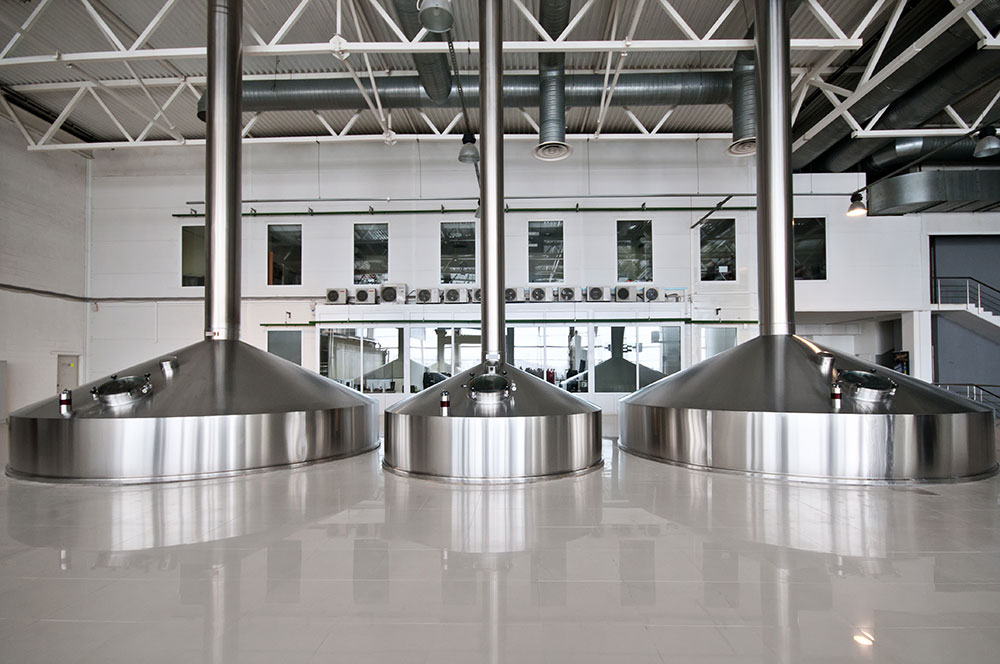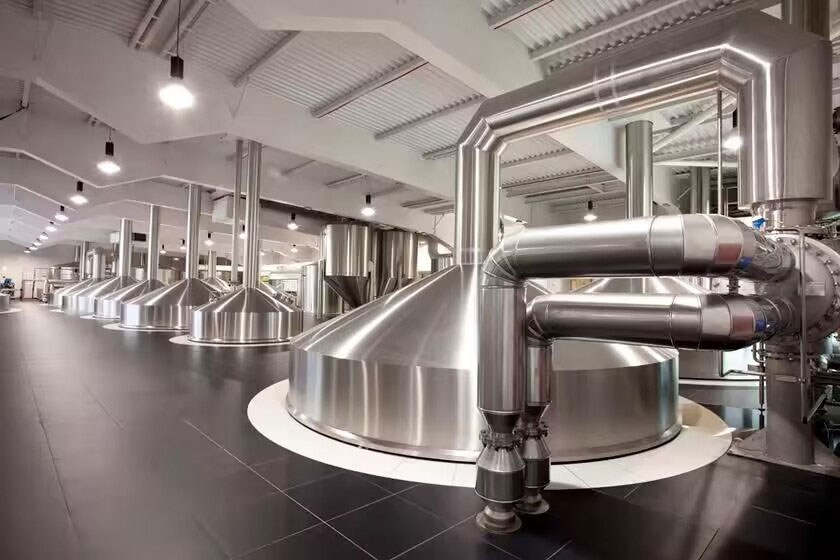

During beer production, carbon dioxide is both a by-product generated during fermentation and an important process gas used throughout the brewery. Yeast naturally produces a significant amount of CO₂ during fermentation, while breweries continuously require CO₂ for carbonation, tank purging, oxygen removal from pipelines, beer transfer, filling and packaging, pressure control, and other processes.
Under traditional production models, CO₂ generated during fermentation is often released into the atmosphere, while the CO₂ required for production is purchased from external suppliers. For medium and large commercial breweries, this means the same resource is discharged on one side and purchased again on the other.
A CO₂ recovery system is designed to address this issue. By collecting, purifying, drying, compressing, liquefying, and storing CO₂ generated during fermentation, the gas that would otherwise be released can be converted into a reusable production resource and supplied back to the brewery’s process systems.
Why Do Breweries Need a CO₂ Recovery System?
CO₂ is widely used as a process gas in beer production, mainly for:
Beer carbonation
Fermenter and bright beer tank purging
Oxygen removal from pipelines and equipment
Beer transfer
Filling and packaging
Tank pressure control
As brewery production capacity increases, CO₂ consumption generally increases as well. At the same time, beer fermentation continuously generates CO₂.
For commercial breweries with a certain production scale and stable fermentation load, a CO₂ recovery system can connect the CO₂ generation side with the consumption side, creating an internal CO₂ recycling loop.
This can help reduce the direct release of fermentation CO₂, reduce dependence on externally supplied CO₂, and improve the stability of the brewery’s CO₂ supply.
Which Breweries Are Suitable for a CO₂ Recovery System?
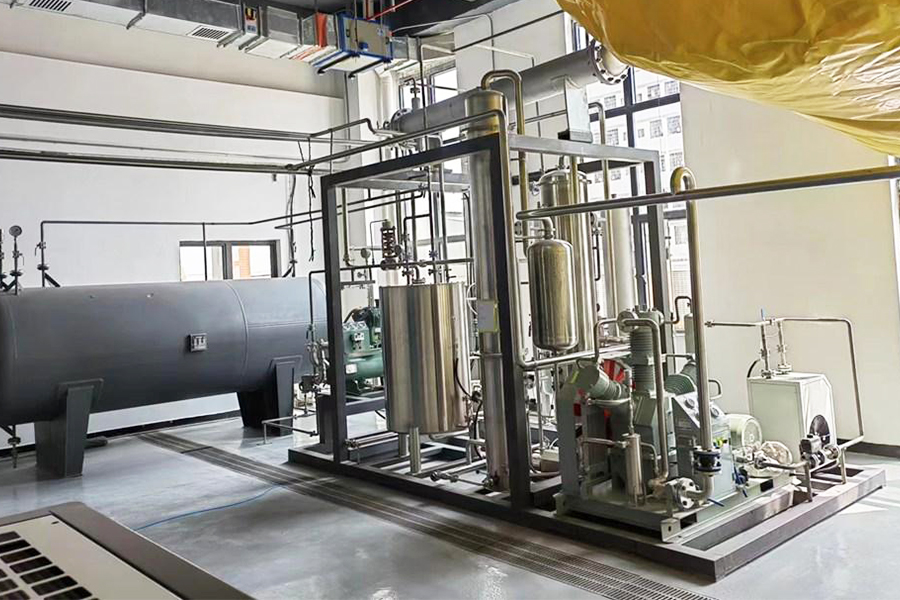
CO₂ recovery is not simply a matter of adding another piece of equipment. It is an integrated engineering system connected to fermentation, gas treatment, storage, and process gas supply.
Whether a brewery is suitable for a CO₂ recovery system should be evaluated based on its specific production conditions, including:
Annual beer production
Number and working volume of fermenters
Fermentation cycles and production schedule
Amount of CO₂ generated
Actual CO₂ consumption
External CO₂ purchase price and supply stability
Energy and operating costs
Equipment investment
CO₂ storage capacity
Available installation space and site conditions
For medium and large commercial breweries, especially those with long operating periods, stable fermentation loads, and relatively high CO₂ consumption, a CO₂ recovery system is generally worth evaluating from both technical and economic perspectives.
For small craft breweries, if both CO₂ generation and consumption are relatively limited, purchasing food-grade CO₂ may be a simpler option. At the same time, compact CO₂ recovery systems are also available for smaller breweries. Therefore, the final decision should be based on project-specific calculations rather than brewery size alone.
How Does a Brewery CO₂ Recovery System Work?
A complete brewery CO₂ recovery system can generally be divided into the following stages:
Fermentation CO₂ Collection
Once beer fermentation begins, yeast produces a significant amount of CO₂. During the early stage of fermentation, the gas may contain relatively high levels of air, oxygen, and other impurities, so it should not be sent directly into the recovery system.
After appropriate initial venting and process assessment, the system begins collecting CO₂ once the gas reaches the required recovery conditions.
Fermenters are typically equipped with corresponding CO₂ collection, control, and transfer systems to ensure stable operation of the downstream recovery equipment.
Gas Pretreatment and Buffering
Collected fermentation gas may contain foam, moisture, and certain volatile substances, so pretreatment is normally required.
A gas buffer system helps stabilize the flow rate and pressure of the gas entering the recovery equipment, allowing the subsequent purification and compression systems to operate more consistently.
CO₂ Purification
Raw CO₂ generated during fermentation is not high-purity gas that can be directly reused in beer production.
It may contain ethanol, moisture, oxygen, hydrogen sulfide, and other volatile impurities. Appropriate treatment units, such as gas washing, filtration, and adsorption systems, are therefore required to remove unwanted components.
The specific purification process should be designed according to the composition of the fermentation gas and the required final CO₂ quality.
Compression and Drying
After pretreatment and purification, the CO₂ enters the compression system, where its pressure is increased and its volume is reduced.
Condensed water generated during compression needs to be separated promptly. A drying system can then further reduce the moisture content of the CO₂ and create suitable conditions for subsequent liquefaction.
CO₂ Liquefaction
After compression and treatment, CO₂ is liquefied under controlled cooling conditions.
Liquefaction significantly reduces the storage volume of CO₂, allowing large quantities of recovered CO₂ to be stored in a dedicated liquid CO₂ storage tank and supplied according to the brewery’s production requirements.
Liquid CO₂ Storage and Reuse
The treated liquid CO₂ is stored in a dedicated storage tank. When CO₂ is required during beer production, the liquid CO₂ can be vaporized and passed through the appropriate pressure-regulation system before being supplied to different points of use.
Where Can Recovered CO₂ Be Used in Beer Production?
After appropriate treatment and once the required quality specifications are met, recovered CO₂ can be reused in multiple beer production processes.
Beer Carbonation
CO₂ can be used to adjust the carbonation level of finished beer to the required target.
Fermenter and Bright Beer Tank Purging
CO₂ can be used to displace air inside tanks, helping reduce oxygen ingress and support low-oxygen operating conditions.
Oxygen Removal from Pipelines and Equipment
During beer transfer and equipment changeovers, CO₂ can be used for gas displacement to help reduce the potential impact of oxygen on beer quality.
Beer Transfer
In certain processes, CO₂ can be used to maintain tank pressure and provide the pressure required for beer transfer.
Filling and Packaging
Depending on the specific packaging process, CO₂ can be used for gas displacement and pressure control during bottle, can, and keg filling.
Tank Pressure Control
CO₂ can be used for process pressure control in fermenters, bright beer tanks, and other pressure-rated vessels.
Therefore, a CO₂ recovery system is not an isolated piece of equipment. It can be integrated with the brewery’s fermentation, storage, filtration, filling, and gas supply systems as part of an overall engineering solution.
What Are the Benefits of Building a CO₂ Recovery System?
For medium and large commercial breweries, CO₂ recovery can provide value in several areas.
Reduce External CO₂ Purchases
By recovering CO₂ generated during fermentation, a brewery can partially replace externally purchased CO₂ and reduce its dependence on external suppliers.
The actual amount of external CO₂ that can be replaced needs to be calculated based on the amount of CO₂ generated and the brewery’s actual consumption.
Improve CO₂ Supply Stability
Beer production requires a continuous CO₂ supply, while external supply can be affected by market prices, logistics, and availability.
An on-site CO₂ recovery and storage system can provide an internal CO₂ source and use storage capacity to buffer the difference between CO₂ generation and production demand.
Improve Resource Utilization
Fermentation CO₂ that might otherwise be released can be recovered, purified, liquefied, and reused, turning a fermentation by-product into a usable resource for beer production.
Tiantai CO₂ Recovery Solutions
As a beer and beverage equipment manufacturer and engineering solution provider, Tiantai can plan integrated CO₂ recovery systems according to the brewery’s production capacity, process requirements, and site conditions.
During project planning, the following factors are considered:
Production Capacity
Calculate CO₂ generation and consumption requirements based on annual beer production and the production schedule.
Fermentation System
Design the CO₂ collection system according to the number and working volume of fermenters, fermentation cycles, and operating conditions.
Recovery Capacity
Determine the required gas treatment and recovery capacity based on the actual amount of CO₂ generated.
CO₂ Quality Requirements
Design the purification, drying, and quality-control processes according to the intended applications of the recovered CO₂.
Storage Capacity
Configure an appropriate liquid CO₂ storage capacity according to the time difference between CO₂ generation and consumption.
Automated Control
Use automated control systems to achieve stable operation of CO₂ collection, treatment, storage, and supply processes.
Site Conditions
Develop the overall system layout based on the brewery’s building layout, available equipment space, utility conditions, and existing production systems.
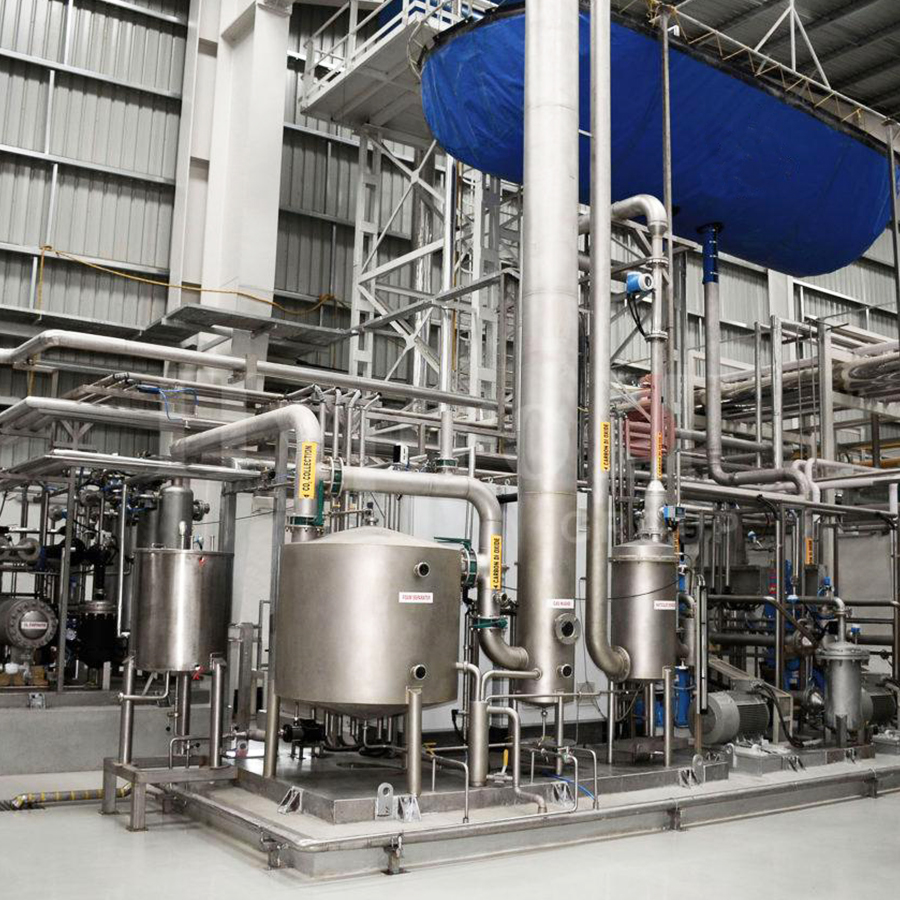
From fermentation gas collection to purification, compression, drying, liquefaction, storage, and finally CO₂ vaporization and production use, the entire system needs to be properly integrated with the brewery’s existing processes.
For modern commercial breweries, CO₂ is not only a by-product generated during fermentation but also an important process resource continuously used throughout production.
A CO₂ recovery system is more than simply adding a set of equipment. System capacity, recovery rate, storage capacity, and economic feasibility all need to be calculated and designed according to the brewery’s actual production conditions.
If you are planning a large commercial brewery or evaluating a CO₂ recovery project for an existing brewery, Tiantai can develop a suitable CO₂ recovery and reuse solution based on your beer production capacity, fermentation system, CO₂ consumption requirements, and site conditions.